
Table of Contents
- Why Catering Transforms Large Family Gatherings
- How Much Food to Order for a Party
- Types of Catering Services for Family Events
- Catering Cost Per Person: Budget Breakdown
- Managing Dietary Requirements and Allergens
- Catering Quote Checklist: What to Ask
- Catering Contract Terms to Look For
- Frequently Asked Questions
Last Updated: October 9, 2026
Why Catering Transforms Large Family Gatherings
Hosting a large family gathering brings joy and logistical stress, which is why catering large family gatherings transforms the experience.
The difference between a stressed host and a relaxed one often comes down to one decision: outsourcing the food.
At Ninin's Indo Street Food, we've catered family celebrations since 2007. The best gatherings aren't defined by fancy plating but by generous portions, authentic flavour, and a host who isn't exhausted by 6 PM.
How Much Food to Order for a Party
The most common mistake families make is underestimating how much people eat.
A practical rule: plan 150-200 grams per person for a casual gathering, or 250-300 grams if the event runs over three hours.
The calculation shifts based on event type and timing:
- Lunch gathering (12-2 PM): 200-250 grams per person
- Afternoon event (2-5 PM): 150-200 grams per person
- Evening celebration (6 PM+): 250-350 grams per person if it's the main meal
For family gatherings, add 10-15% extra: events run longer than planned and people eat more when relaxed.
With multiple service styles, such as a buffet plus a grazing table, you can reduce the per-person amount slightly because guests self-serve.
Types of Catering Services for Family Events
Catering formats differ. Understanding them helps you choose what suits your gathering, budget, and space.
Buffet Service
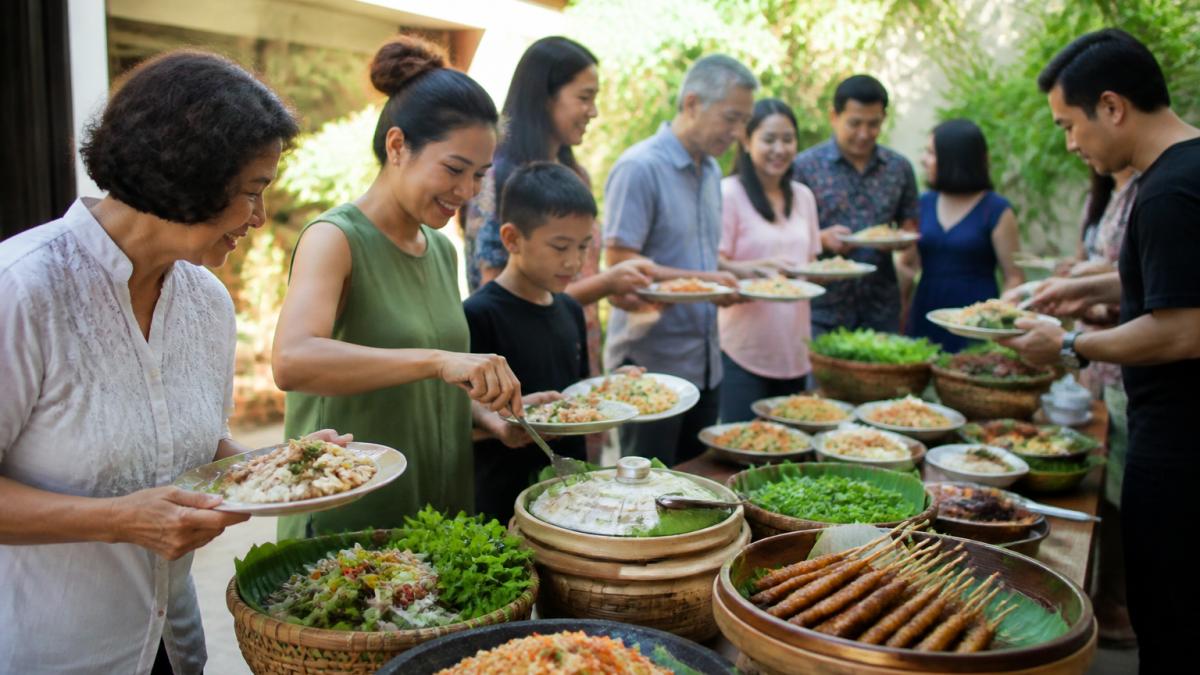
Buffet catering is the most flexible option when catering large family gatherings: guests move through a serving line, choosing what they want in the quantities they prefer.
Advantages include lower cost per person, flexibility for mixed dietary preferences, and a relaxed atmosphere.
The trade-off: buffet service needs adequate table space and standing room, and plated meals may feel more refined for formal events.
Plated Meals
Plated service means the caterer pre-portions meals and serves seated guests.
Plated meals create a sense of occasion and suit limited space or precise portion control. A caterer handles serving and clearing, so you focus on guests.
The downside is cost, plated service runs higher than buffet, plus you need adequate seating, and last-minute dietary changes are harder to accommodate.
Grazing Tables and Platters
Grazing tables are popular because they're visually striking and encourage mingling. A large table displays various items for guests to pick at throughout.
Grazing suits afternoon or cocktail-style events, or supplements a main meal. It's casual, interactive, and accommodates mixed diets.
The limitation: grazing tables alone won't sustain people through a full evening. They work best alongside a hot main course.
Catering Cost Per Person: Budget Breakdown
Most catering pages dodge the money question, unhelpful when deciding between a grazing table and a full buffet for 80 relatives. Here's what drives the per-head price, so you can budget before requesting quotes.
What actually drives the per-person price
Five variables move the number most:
- Service style. Buffet is cheapest per head because labour is self-service; plated is most expensive due to servers, timing, and clearing. Grazing tables sit between.
- Menu complexity. A single-protein rice or noodle dish with two sides costs less than a multi-protein spread with salads, mains, and dessert. Every hot dish adds ingredients and labour.
- Guest count. Fixed overheads (travel, setup, staff minimums) spread thinner at 30 guests than at 100. Tiered rates are common, higher per head below a threshold, dropping once you cross it.
- Day and time. Saturday evening in peak season (November-December) is priciest; Sunday lunch or midweek is often cheaper.
- Inclusions. Cutlery, plates, napkins, staff, chafing dishes, delivery, and setup/breakdown may be bundled or charged separately. A quote that looks 20% cheaper may simply exclude items another includes.
A realistic planning range
Rather than quote a single figure, use these broad bands as planning ranges, actual prices depend on the five variables above.
- Casual buffet, drop-off only (no staff): the lowest band. Suitable for relaxed backyard gatherings where you set up and replenish dishes yourself.
- Buffet with on-site staff: a mid band. Staff manage the food station, replenish, and handle basic cleanup.
- Grazing table as the centrepiece: priced per platter or table length. Often comparable to a mid-band buffet for the same headcount, but less filling as a sole food source.
- Plated, seated service: the highest band. Expect roughly 20-30% above an equivalent buffet once you factor in servers, timing, and clearing.
When requesting quotes, ask each caterer for their per-head price at your guest count, with inclusions itemised. That turns vague ranges into comparable numbers.
The inclusions trap
Two quotes for the same event can differ by hundreds of dollars purely because of what's bundled. Confirm each quote covers:
- Food and serving equipment (chafing dishes, platters, tongs)
- Disposable or hire plates, cutlery, and napkins
- Serving staff and their minimum hours
- Delivery, setup, and breakdown
- Travel surcharge beyond a base radius
- GST, inclusive or exclusive
A quote excluding staff and hire items isn't cheaper; it's incomplete. Normalise every quote to the same inclusions before deciding.
Where you can genuinely save
- Reduce hot dishes, increase cold and grazing elements. Cold dishes need less kitchen time and equipment.
- Choose a Sunday lunch over a Saturday dinner. Off-peak slots are often cheaper.
- Lock in your headcount early. Late changes force re-costing, and some caterers surcharge changes inside the final week.
- Skip plated service unless the occasion calls for it. Buffet delivers the same food for less.
- Ask about a minimum spend rather than a minimum headcount. Adding a grazing platter can be cheaper than a shortfall fee.
Getting a like-for-like comparison
Send the same brief to at least three caterers: guest count, date, time, service style, dietary requirements, and venue address. Ask each to quote with inclusions itemised and GST stated, then compare total event cost, not the per-head figure alone.
Managing Dietary Requirements and Allergens
Dietary requirements are where a family gathering can go wrong fastest: a guest with a severe allergy can end up in hospital. In Australia, caterers are bound by food safety obligations, and knowing them helps you ask the right questions.
The regulatory backdrop you should know about
Commercial caterers in Australia operate under the Food Standards Code, administered by Food Standards Australia New Zealand (FSANZ) and enforced by state and territory health authorities (Food Standards Code). Two standards matter most:
- Standard 3.2.2 covers food safety practices, how food is received, stored, processed, displayed, and transported.
- Standard 3.2.2A strengthens requirements around food handler training and allergen management. Caterers are expected to have documented allergen controls and trained staff.
A compliant caterer should explain without hesitation how they identify allergens, prevent cross-contamination, and train staff. If they can't, that's a red flag.
The allergens that matter most
The Food Standards Code identifies declared allergens that must be managed and communicated (Food allergies). Those most likely to appear on a family gathering menu:
- Gluten (wheat, barley, rye, oats)
- Crustaceans and molluscs
- Eggs
- Fish
- Milk and dairy
- Peanuts
List every guest's requirement against these categories. "Gluten-free" isn't the same as "coeliac", coeliac disease requires strict cross-contamination avoidance, not just removing obvious gluten ingredients.
How to brief your caterer properly
A vague brief produces a vague result. Use a structured format:
| Guest | Requirement | Severity | Notes |
|---|---|---|---|
| Guest A | Vegan | Preference | No animal products |
| Guest B | Coeliac | Medical | Strict gluten avoidance, cross-contamination risk |
| Guest C | Shellfish allergy | Anaphylactic | EpiPen carried; separate prep required |
| Guest D | Lactose intolerant | Medical | Small amounts tolerated |
This table tells the caterer what to prepare, flags medical versus preference requirements, and identifies who needs the strictest controls. Send it at least two weeks before the event and confirm the final version one week out.
Cross-contamination: the questions that matter
For guests with severe allergies, cross-contamination is the real risk, not the recipe. Ask directly:
- Are separate utensils, chopping boards, and prep areas used for allergen-free dishes?
- Are fryers or cooking surfaces shared between allergen-containing and allergen-free items?
- Are allergen-free dishes stored and transported sealed and labelled, or alongside other food?
- Who checks allergen-free dishes before service?
- Are staff trained in allergen management under Standard 3.2.2A?
A professional caterer answers without defensiveness. Vague answers mean weak controls.
Practical safeguards for the day
- Label allergen-free dishes clearly at the buffet.
- Serve allergen-free portions separately rather than asking a guest to pick through a shared platter.
- Nominate one person to confirm with the caterer on arrival that allergen-free dishes match the brief.
- Keep the caterer's contact number handy in case a requirement changes on the day.
- Ask guests with severe allergies to bring their medication and brief you in advance, not on arrival.
Vegetarian, vegan, and cultural requirements
These are easier than allergies but still need planning. Vegetarian and vegan guests are often given a single dish that feels like an afterthought, ask for at least two substantial plant-based options. For cultural or religious requirements (halal, kosher, no pork, no beef), confirm the kitchen can accommodate them and whether separate preparation is possible.
When to walk away
If a caterer dismisses your dietary questions, can't describe their allergen controls, or suggests "just pick around it", find another. Getting this wrong isn't a disappointing meal, it's a medical emergency.
Catering Quote Checklist: What to Ask
Asking the right questions saves time and prevents misunderstandings. Use this checklist when requesting a quote:
- What is the minimum guest count? Do they have a minimum order value?
- What menus do they offer? Can you customise a menu?
- What does the per-person price include? (Food only, or also plates, cutlery, napkins, serving staff?)
- Do they charge for delivery? Is there a delivery radius or surcharge for distant locations?
- What are their setup and breakdown times?
- Can they accommodate specific dietary requirements? How do they manage allergies?
A caterer who answers these clearly is likely to deliver a smooth event.
Catering Contract Terms to Look For
Before you commit, review the contract carefully.
Timing and Delivery: State arrival, setup duration, service start, and breakdown times.
Beverages and Alcohol: Clarify included drinks.
A clear contract prevents misunderstandings and gives you recourse if the caterer doesn't deliver.
At Ninin's Indo Street Food, we specialise in stress-free catering for family events.
Food Standards Australia New Zealand guidelines on food safety for catering
Get in touch for an instant quote and let us handle the catering while you enjoy your family.
Frequently Asked Questions
How much food should I order for a large family gathering?
A practical starting point is 150-200 grams of food per person for a two-to-three-hour event, or 250-300 grams if the meal is the main focus. For a gathering of 80 people, that means 12-24 kilograms of food depending on event length and whether alcohol is served. Ask your caterer about their standard portion sizes and mention your guest count and event duration so they can recommend quantities that suit your specific gathering.
What should a catering quote include?
A complete quote must specify the menu items and portion sizes per person, total guest count, delivery date and time, setup and service fees, any equipment hire (tables, chairs, serving utensils), dietary accommodations, cancellation terms, and payment schedule. Request itemised pricing so you understand what you're paying for. Clarify whether gratuity, travel costs, or minimum guest numbers apply, and confirm that the caterer has public liability insurance.
How can I cater for different dietary requirements at a family event?
Inform your caterer early about all dietary needs: vegan, gluten-free, dairy-free, nut allergies, and religious restrictions. Ask whether they prepare these meals separately to avoid cross-contamination and whether they label dishes clearly. Request a sample menu that accommodates multiple requirements without compromising flavour or portion size. Confirm that your caterer has food safety training and can provide allergen information for every dish served.
What is the difference between buffet and plated catering for family events?
Buffet service allows guests to select portions themselves, suits casual gatherings, and works well for mixed dietary needs since guests see what they're eating. Plated meals offer more control over portion sizes and presentation, create a formal atmosphere, and simplify service logistics. Grazing tables and platters work for relaxed events where guests graze throughout, offering variety and visual appeal. Choose based on your event's formality, guest count, and available space.