
Table of Contents
- Why Gluten Free Indonesian Food Catering Adelaide Works for Every Guest
- Coeliac Friendly Catering Options Without Compromise
- Indonesian Buffet Catering for Weddings: What to Expect
- Corporate and Community Events: Flexible Catering Packages
- Food Trailer and Buffet Service: Choosing Your Format
- Dietary Requirement Catering Tips Before You Book
- Conclusion
- Frequently Asked Questions
Last Updated: September 30, 2026
Why Gluten Free Indonesian Food Catering Adelaide Works for Every Guest
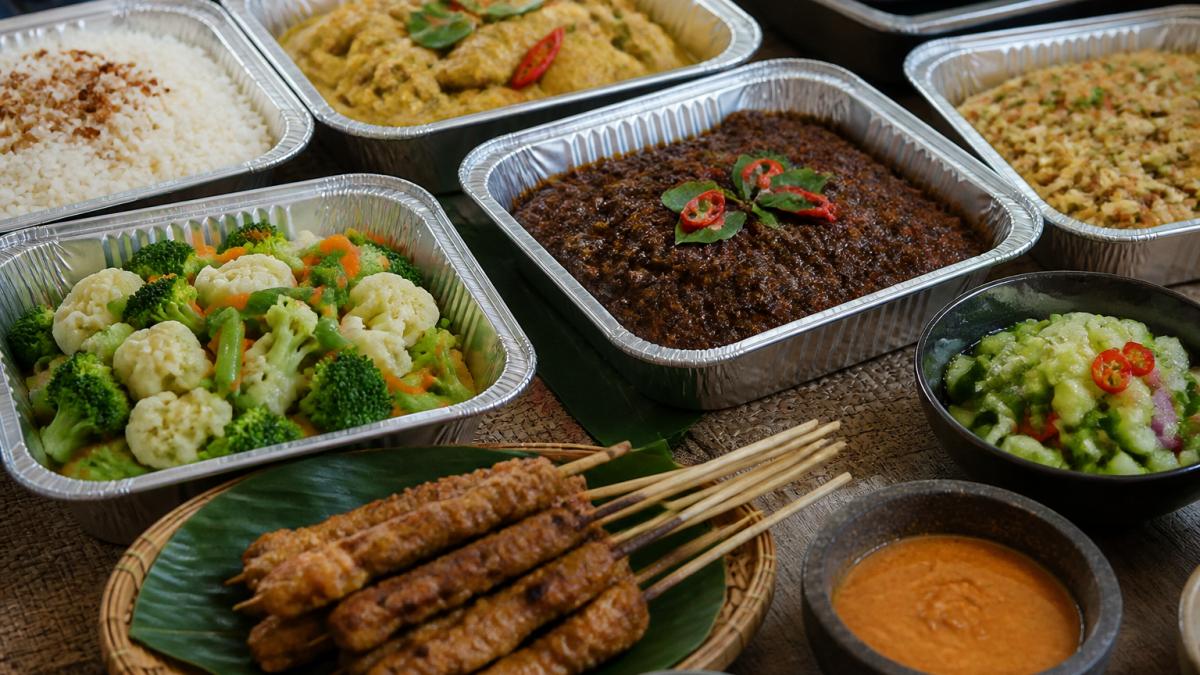
Gluten free Indonesian food catering Adelaide event planners can rely on starts with a simple fact: much of Javanese cooking is naturally free of wheat. At Ninin's Indo Street Food, we have catered weddings, corporate functions and community festivals since 2007, and the dishes guests ask for most rarely need a gluten substitute at all. Coconut rice, slow-cooked curries, tempeh and grilled skewers are built on rice, coconut and spice rather than flour. Coconut rice, slow-cooked curries, tempeh and grilled skewers are built on rice, coconut and spice rather than flour.
That matters because coeliac disease is not a preference. For a guest with coeliac disease, even small traces of gluten can trigger a reaction, which is why Coeliac Australia's guidance on gluten free catering treats separate preparation as essential rather than optional. Below, we break down which dishes are safe by default, how cross-contamination is managed, and how to choose between buffet, trailer and plated service for your event.
Naturally Gluten Free Dishes in Javanese Cooking
Most Indonesian dishes are gluten free before anyone adjusts them. The core of Javanese cooking is rice, coconut milk, fresh chillies, lemongrass, galangal and tamarind, none of which contain wheat.
A typical gluten free Indonesian menu includes:
- Coconut rice cooked in coconut milk and pandan
- Slow-cooked curries built on spice pastes rather than flour thickeners
- Tempeh and tofu dishes, marinated and fried
- Grilled satay skewers with a peanut-based sauce
- Vegetable dishes with beans, cabbage and carrot
- Fresh sambals made from chilli, tomato and lime
A common mistake is assuming soy sauce is always safe. Standard soy sauce contains wheat, so it needs to be swapped for a tamari or gluten free alternative. That single substitution keeps a dish safe without changing how it tastes.
Coeliac Friendly Catering Options Without Compromise
Coeliac friendly catering options work when the kitchen treats gluten as a contamination risk, not just an ingredient to leave out. The food itself is often already safe; the danger is in what it touches.
Cross-Contamination Prevention in a Shared Kitchen
Cross-contamination prevention comes down to separation at every step. In a shared kitchen, that means:
- Dedicated chopping boards and utensils for gluten free prep
- Separate fryers or oil, since wheat-based batter leaves residue
- Gluten free sauces decanted into their own containers
- Clean hands and gloves changed between tasks
- Labelled serving spoons so guests do not mix dishes
Indonesian Buffet Catering for Weddings: What to Expect
Indonesian buffet catering for weddings suits large guest lists because it lets people take what they want while you control the dietary spread.
- Rice and starch base, coconut rice (nasi uduk), plain steamed rice, and sometimes lontong (compressed rice cake)
- Two to three curries, rendang, opor ayam (coconut chicken), or sayur lodeh (vegetable coconut stew), all thickened with spice paste and coconut rather than flour
- Grilled and fried proteins, chicken or beef satay with peanut sauce, fried tempeh, fried tofu
- Vegetable sides, urap (mixed vegetables with grated coconut), gado-gado with a peanut dressing, or stir-fried greens
- Sambals and condiments, sambal terasi, sambal matah, pickled cucumber and shallot
- Dessert, klepon, kue lapis, or fresh fruit platters, most of which are rice-flour or fruit based
What to expect on the day:
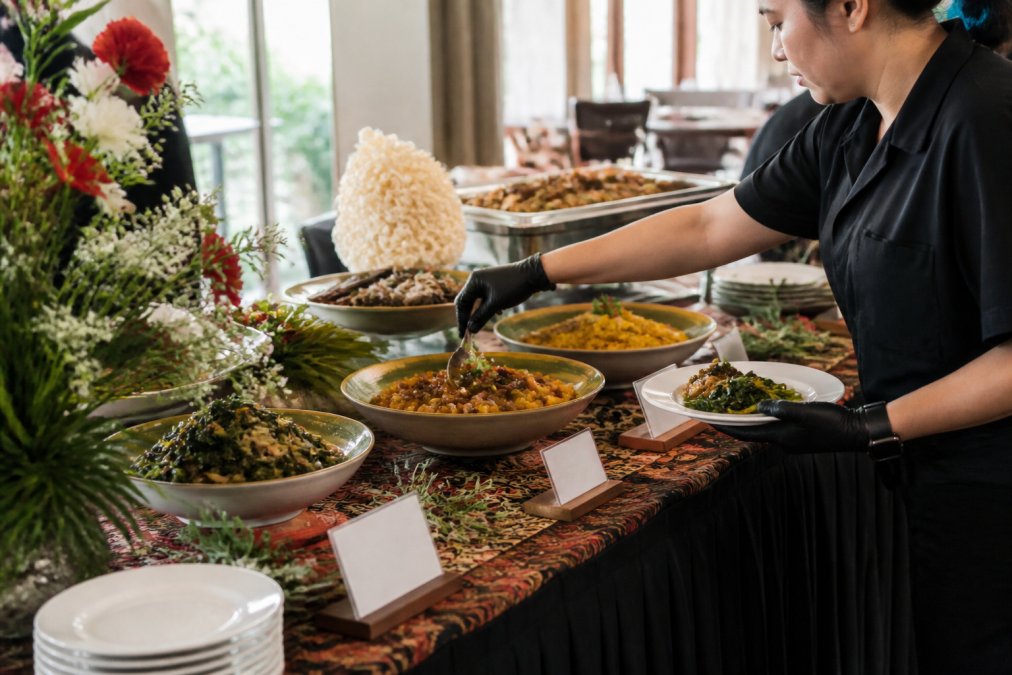
- Chafing dishes kept at safe temperature throughout service, with gluten free dishes on a separate table or clearly separated station where possible
- Dietary cards labelling each dish, so guests can serve themselves with confidence
- Dedicated serving spoons for each dish, and separate spoons for gluten free items to prevent crumb transfer from bread or fried battered items
- Staff on hand to answer questions about ingredients, and briefed on which dishes contain wheat-based soy sauce versus tamari
- Generous portions, since buffet service lets guests return for more
The practical advantage is flexibility. A vegan guest, a coeliac guest and a guest with a nut allergy can all eat from the same table when each dish is clearly labelled and prepared with separation in mind. The trade-off is that buffet service needs more space and more staff attention to dietary separation than a plated service, so venue layout should be confirmed before you lock in the format.
Corporate and Community Events: Flexible Catering Packages
- Drop-off buffet, food delivered in chafing dishes or trays, set up by your team or ours, no serving staff. Lowest cost, best for offices and informal gatherings.
- Attended buffet, staff set up, replenish and serve, and can answer dietary questions. Middle cost, best for client-facing events and larger community functions.
- Food trailer or live station, a caterer on site cooking or assembling to order. Highest cost, best for festivals, markets and outdoor community events where the food is part of the atmosphere.
| Event Type | Typical Service Format | Dietary Handling | Planning Priority |
|---|---|---|---|
| Wedding | Buffet or plated | Full gluten free, vegan, dairy free | Book early, confirm headcount |
| Corporate function | Drop-off or attended buffet | Labelled dishes, nut free options | Match service to agenda |
| Community event | Attended buffet or trailer | Flexible, budget-led | Confirm numbers and budget first |
| Festival or market | Food trailer | Gluten free and vegan options | Check site access and power |
For community organisations, ask whether the caterer can provide a simple invoice with an ABN and whether they carry public liability insurance, since many councils and school boards require both before approving a caterer on site.
Food Trailer and Buffet Service: Choosing Your Format
Food trailer and buffet service each suit different events, and the right choice usually comes down to venue and guest flow. A trailer brings street-food energy and works well outdoors; a buffet keeps everything indoors and under your control.
Choose the trailer when:
- Your event is outdoors or at a festival
- You want a casual, social atmosphere
- Guests will move around rather than sit
Choose the buffet when:
- Your venue is indoors with limited outdoor access
- You need seated, structured service
- You are managing several dietary requirements at once
Dietary Requirement Catering Tips Before You Book
Dietary requirement catering tips save you a headache on the day. The earlier you share requirements, the better the kitchen can plan.
- Collect dietary needs with your RSVPs, not after
- Ask guests to specify coeliac disease separately from gluten preference
- Confirm how the caterer prevents cross-contamination
- Request a sample menu with dietary labels
- Ask about nut free and dairy free handling
- Confirm portion sizes for your headcount
- Check delivery, set-up and service timing in writing
Conclusion
Feeding a crowd with mixed dietary needs is where most catering plans come unstuck, and it is exactly where a naturally gluten free menu gives you room to move. Ninin's Indo Street Food brings authentic Javanese recipes, generous portions and flexible buffet or trailer service to events across the city, with packages built around your budget and guest list. Get started with Ninin's Indo Street Food and give every guest, coeliac or not, a plate worth remembering.
Frequently Asked Questions
Is traditional Indonesian food naturally gluten-free?
Many Indonesian dishes are naturally gluten free because they rely on rice, coconut, fresh chillies, lemongrass and tempeh rather than wheat. Coconut rice, satay skewers, rendang-style curries and vegetable dishes are common examples. However, soy sauce and some fried snacks contain wheat, so a caterer must confirm each recipe. For gluten free Indonesian food catering Adelaide hosts can trust, ask which dishes are prepared without wheat-based sauces and how the kitchen prevents cross-contamination.
How do I ensure my catering is safe for coeliac guests?
Ask the caterer directly how they separate gluten free preparation from other cooking. Look for dedicated utensils, separate fryers, clean surfaces and staff who understand that even small traces of wheat matter for coeliac guests. Request a written list of gluten free dishes and confirm whether sauces are made in-house. Coeliac friendly catering options should include clear labelling at the buffet so guests can serve themselves with confidence.
Can you handle vegan, dairy-free and nut-free guests at the same event?
Yes, a well-planned Indonesian menu can cover several dietary needs at once. Many dishes are plant-based by tradition, using tempeh, tofu and vegetables, while coconut milk replaces dairy in curries. Nut-free versions of satay sauce are possible with advance notice. Share every requirement when you book, and confirm the final menu in writing so the kitchen can adjust recipes and avoid cross-contact during service.
What should I look for when hiring a caterer for dietary requirements?
Check three things: whether the caterer asks about dietary requirements before you raise them, whether they can name specific gluten free dishes, and whether they have a clear process for avoiding cross-contamination. Ask for recent event photos or testimonials, and confirm delivery timing and setup in writing. Reliable dietary requirement catering tips start with early communication, so book at least a few weeks ahead and reconfirm numbers close to the event date.