
Table of Contents
- Why Gluten-Free and Vegan Catering Matters for Your Event
- Gluten-Free Vegan Catering Menu Ideas That Work
- Cross-Contamination in Gluten-Free Catering: What You Need to Know
- Questions to Ask a Caterer About Dietary Requirements
- Gluten-Free Catering Checklist for Event Planning
- Collecting Dietary Information From Your Guests
- Making the Most of Your Catering Budget
- Frequently Asked Questions
Last Updated: October 5, 2026
Why Gluten-Free and Vegan Catering Matters for Your Event
Dietary restrictions aren't edge cases anymore, they're central to event planning. When you're catering for gluten-free and vegan guests, you're not just accommodating preferences. You're showing respect for their health, values, and ability to enjoy the meal alongside everyone else.
The challenge most event planners face is treating dietary needs as an afterthought. You pick a caterer, mention "we have a few gluten-free and vegan people," and hope they handle it.
Getting this right requires three things: understanding what your guests actually need, choosing a caterer who takes those needs seriously, and planning ahead. This guide walks you through each step.
Gluten-Free Vegan Catering Menu Ideas That Work
The best gluten-free vegan catering menus don't feel like restrictions. They feel like choice. The key is moving beyond obvious options into dishes that work because of their ingredients, not in spite of them.
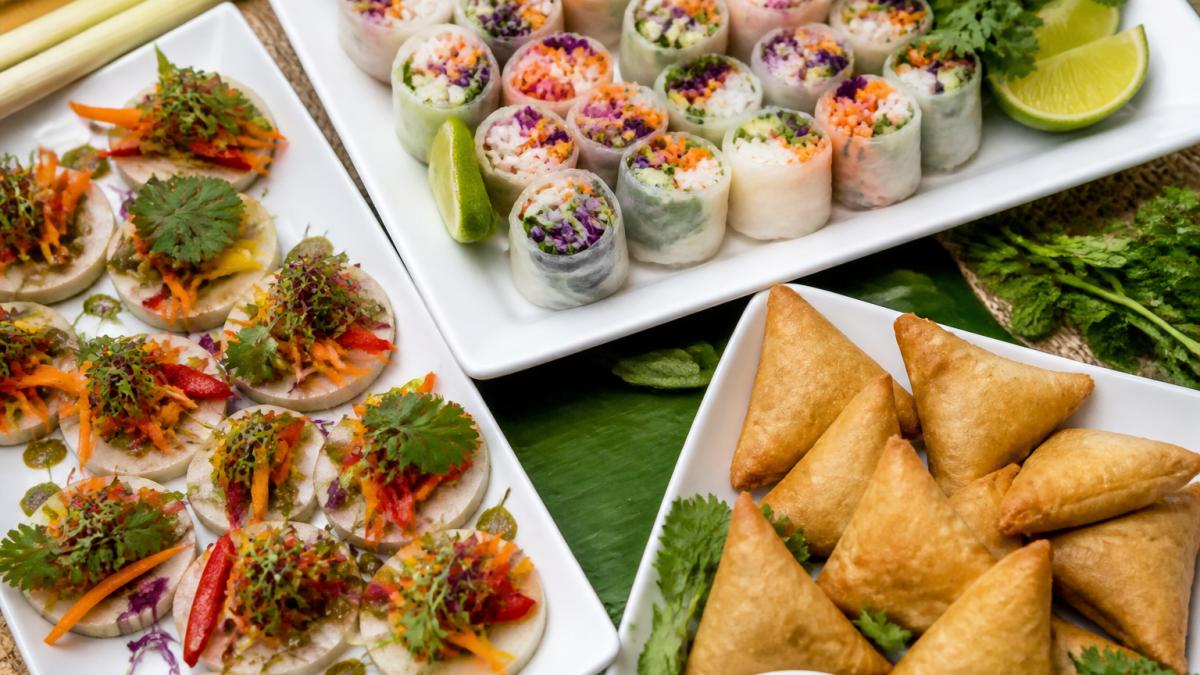
Rice paper rolls are a natural fit for dietary catering. They're naturally gluten-free, can be filled with vegetables and tofu, and work across vegan and non-vegan guests.
Canapés and finger food give you flexibility. Think roasted vegetable skewers with tahini drizzle, crispy falafel with herb yoghurt (dairy-free option), or avocado on gluten-free crackers.
Savoury Options Beyond the Obvious
Satay skewers with peanut sauce check multiple boxes if you use gluten-free tamari instead of soy sauce and coconut milk instead of cream. Vegetable samosas made with rice flour pastry work for gluten-free guests.
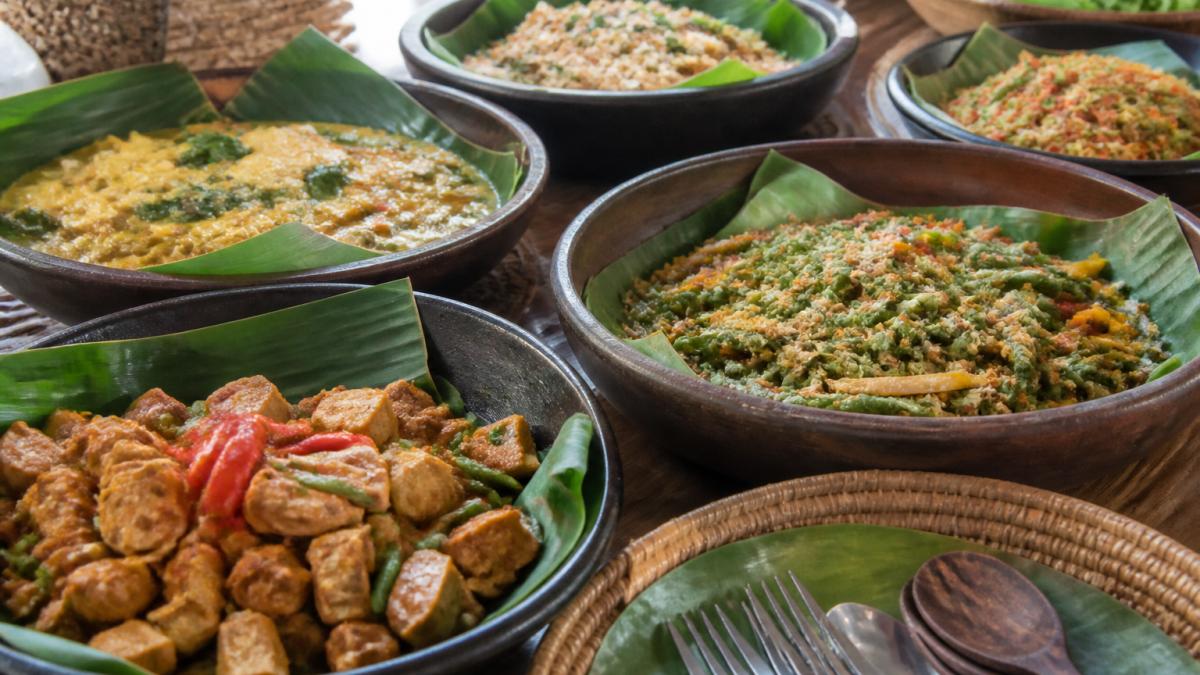
The mistake most caterers make is treating vegan and gluten-free as separate problems. Indonesian cuisine naturally bridges this gap. Dishes built on vegetables, legumes, and rice become gluten-free vegan options without modification.
When you're choosing a caterer for gluten-free vegan catering, ask specifically about their approach to flavour. Can they make a vegetable dish taste generous and interesting, or does it taste like vegetables with salt? The answer matters.
Sweet Treats and Morning Tea
Gluten-free vegan baking is harder than savoury work, which is why many caterers skip it. Good caterers don't skip it. Coconut-based cakes with almond flour work. Fruit-based desserts, poached pears, berry compotes, don't require dairy or gluten. Vegan chocolate mousse made with aquafaba (chickpea liquid) is genuinely good.
For morning tea, focus on items that work naturally. Fresh fruit platters, coconut water, herbal teas, and almond milk coffee options require no special preparation. Homemade granola with coconut yoghurt feels intentional rather than afterthought.
Dietary Labels and Allergen Coverage
Clear labelling is not decoration. Every platter should carry a label stating whether it is gluten-free (GF), vegan (V), dairy-free (DF), nut-free (NF) or contains other allergens. A common pattern is a small card or tag on each dish, plus a master allergen sheet at the service table.
Gluten and dairy are not the only allergens that matter. Nuts, soy, sesame and egg appear frequently in catering menus, including in sauces and dressings. Ask whether the caterer can substitute ingredients to remove an allergen without losing the dish. For example, peanut sauce can sometimes be replaced with a sesame-free tahini dressing, and soy sauce can be replaced with gluten-free tamari.
Per-Person Serving Recommendations
Quantities vary by event type. For a sit-down lunch, plan on one main dish per person plus one to two sides. For a buffet, plan on 200 to 250 grams of protein or main per person, 150 to 200 grams of starch, and 100 to 150 grams of salad or vegetables.
If your guest list includes a mix of dietary requirements, order the same total quantity per person across all options. Dietary guests should not receive smaller portions. Confirm the final numbers with your caterer at least two weeks before the event so they can source ingredients and plan preparation.
Cross-Contamination in Gluten-Free Catering: What You Need to Know
Gluten particles transfer through shared cutting boards, utensils, fryers, and even airborne flour dust. For guests with coeliac disease, even tiny amounts trigger a reaction.
The questions to ask aren't polite. Ask whether they use dedicated preparation areas for gluten-free items. A caterer who hesitates or gives vague answers isn't the right choice for your event.
Cross-contamination protocols are non-negotiable for any guest with coeliac disease. Separate prep surfaces, dedicated utensils, and clear labelling throughout the kitchen aren't nice-to-haves, they're baseline.
Questions to Ask a Caterer About Dietary Requirements
Before booking, have a direct conversation. Don't email a list and hope for a good response. Call. Speak to someone who actually prepares the food.
Start with specifics: How many gluten-free guests? How many vegan? Are any guests coeliac (which requires stricter protocols than simple gluten sensitivity)? Do any guests have nut allergies alongside gluten-free or vegan needs?
Then ask about their process. How do they source ingredients? Do they read labels? Can they provide ingredient lists for specific dishes?
Ask about quantities. Dietary catering shouldn't mean smaller portions. If you're serving 80 people and 12 are vegan, those 12 should get the same generous serving size as everyone else.
Verification and Safety Standards
Request documentation. Ask for ingredient lists, allergen information, and their approach to cross-contamination. A professional caterer will have this ready.
Ask for references from previous events with similar dietary requirements. Not just "we've done gluten-free before," but specific events where they catered for mixed dietary needs without incident.
For coeliac guests, you might ask whether the caterer has completed formal allergen training. Many professional caterers do. It's a sign they take these protocols seriously.
Customisation and Quantities
Confirm that dietary catering isn't a fixed menu. Your vegan guests should be able to choose from options, not be served whatever's left. Your gluten-free guests should get the same dishes as everyone else, just prepared safely.
Discuss quantities explicitly. If you're doing a cocktail-style event with canapés, how many gluten-free and vegan options will be available per person? If it's a sit-down meal, will everyone get the same number of courses?
Make sure the caterer understands your timeline. Do they need advance notice for dietary items? Most professional caterers need at least two weeks. Some need more for specialised items.
Gluten-Free Catering Checklist for Event Planning
Use this checklist to ensure nothing slips through the gaps:
- Confirm total guest count and dietary breakdown (gluten-free, vegan, other allergies, coeliac)
- Choose your caterer at least 4-6 weeks before the event
- Request ingredient lists and allergen information for all planned dishes
- Clarify cross-contamination protocols if any guests are coeliac
- Confirm portion sizes are equal across all dietary options
- Get written confirmation of what will be served and when
- Ask for references from similar events
- Confirm delivery time, setup, and any special equipment needs
- Provide the caterer with a final guest list and dietary breakdown two weeks before
- Do a final confirmation call 48 hours before the event
- On the day, ensure dietary items are clearly labelled and kept separate during service
Collecting Dietary Information From Your Guests
You can't plan gluten-free vegan catering without knowing who needs what. Start collecting dietary information early, ideally when guests RSVP.
Use a simple form: "Do you have any dietary requirements? Please specify (coeliac disease, vegan, vegetarian, nut allergy, dairy-free, other)." Give guests space to explain. "Vegan" is clear.
Follow up with anyone who notes dietary needs. A quick email or call clarifies whether they need strict cross-contamination protocols or just prefer gluten-free options. This information is gold for your caterer.
Share the final dietary breakdown with your caterer at least two weeks before the event. Don't send it the week before.
Making the Most of Your Catering Budget
Dietary catering doesn't have to cost more. It does require different choices.
First, understand that a caterer offering genuine gluten-free vegan catering has real costs. They're buying different ingredients, using separate prep areas, and training staff on protocols. A caterer charging the same for dietary items as standard items isn't accounting for those costs properly.
What Drives the Total Cost
Per-person pricing is the most common way caterers quote, but it is rarely the whole story. Ask for a written quote that separates the following:
- Food cost per person, broken down by menu item or package
- Minimum order value or minimum guest count
- Delivery fee, including distance or time-of-day surcharges
- Setup and pack-down fees, especially for plated or buffet service
- Equipment hire, such as chafing dishes, platters or serving utensils
- Staffing costs, if servers or chefs are required on site
- Surcharges for dietary items, if any
- GST and any other applicable taxes
A quote that only shows a per-person rate can hide fees that appear later. Ask for the total cost for your guest count and dietary mix before you compare caterers.
Package Flexibility and Minimum Orders
Some caterers offer fixed menus at set prices. Others build packages around your budget and guest count. If you have budget constraints, be direct about them. A good caterer will work within what you can spend rather than pushing you toward premium options.
Minimum orders are common. A caterer may require a minimum spend, a minimum number of guests, or a minimum notice period. Confirm these before you commit, especially for smaller events. If your event is below the minimum, ask whether you can combine dietary items with standard items to reach the threshold.
Format and Cost Trade-offs
Consider the format. Buffet-style catering works well for mixed dietary needs because guests see what's available and can choose. Plated service requires more kitchen coordination but feels more formal. Cocktail-style catering with canapés is cost-effective and works naturally for gluten-free vegan options.
Focus your budget on quality over quantity. Fewer, genuinely good dishes beat a long menu of mediocre options. A caterer who does three things well, perhaps rice paper rolls, a vegetable curry, and fresh fruit, serves your guests better than one offering ten options that feel rushed.
Where Dietary Catering Can Save Money
Plant-based dishes built on rice, legumes and vegetables are often cheaper per serve than meat-based dishes. If your menu is already largely gluten-free and vegan, you may find the per-person cost is competitive with a standard menu. The savings come from choosing dishes that are naturally suitable rather than paying for special substitutions on every item.
Delivery and setup are areas where costs can be reduced. Self-collection, if the caterer allows it, removes the delivery fee. Choosing a cold menu rather than a hot one can reduce equipment and staffing costs. Confirm what is included before you decide.
Frequently Asked Questions
Can a caterer provide meals that are both vegan and gluten-free?
Yes. Many caterers, including those offering authentic Indonesian cuisine, can accommodate both requirements simultaneously. Look for caterers who understand cross-contamination risks and prepare these meals separately. Ask whether they use dedicated equipment and preparation areas. Some dishes like rice-based meals, vegetable curries, and fruit platters naturally fit both requirements when prepared with the right oils and sauces.
What questions should you ask a caterer about gluten-free and vegan food?
Ask about their preparation methods, whether they use separate utensils and cutting boards, what their ingredient sourcing looks like, and how they verify vegan claims (check for hidden animal products in sauces and stocks). Request detailed ingredient lists and allergen information. Ask about portion sizes, generous servings matter for guest satisfaction. Clarify pricing, delivery times, and whether they offer customised menus for your event size and budget.
How can you reduce the risk of cross-contamination at an event?
Request that your caterer prepare gluten-free meals in a separate area with dedicated equipment. Ask them to serve gluten-free items first or use separate serving utensils. Brief your serving staff to keep gluten-free and vegan portions distinct. Provide clear labels on each dish. If using a buffet, position allergen-free items at the start of the line. Communicate dietary requirements to all staff involved in food handling, preparation, and service.
What are some gluten-free and vegan catering menu ideas?
Consider rice paper rolls filled with fresh vegetables and tofu, vegetable samosas, falafel with hummus, fresh salads with seeds and nuts, grilled vegetables, coconut-based curries, roasted chickpeas, fresh fruit platters, and gluten-free pastries made with alternative flours. For morning tea, offer gluten-free biscuits, dairy-free cakes, fresh fruit, and plant-based yoghurt. Indonesian cuisine offers natural options like vegetable satay (with peanut sauce verified vegan), gado-gado, and rice-based dishes when prepared without animal products.