
Table of Contents
- Why Indonesian Cuisine Works for Catering
- Building an Indonesian Buffet Menu for Your Event
- Indonesian Finger Food and Snacks for Grazing
- Indonesian Vegetarian Catering Options
- Designing an Indonesian Wedding Catering Menu
- Practical Catering Logistics: Serving, Timing, and Dietary Needs
- Budgeting and Cost Considerations for Indonesian Party Food
- Frequently Asked Questions
Last Updated: October 7, 2026
Why Indonesian Cuisine Works for Catering
Indonesian party food catering has become one of the most popular choices for events across Adelaide.
What makes it so suited to catering? The dishes travel well and taste as good at room temperature as hot, so guests aren't stuck eating cold food while you manage the event.
At Ninin's Indo Street Food, we've been catering events since 2007. Indonesian cuisine keeps getting chosen for weddings, corporate functions, and community festivals because it's generous, authentic, and solves the logistics problem that kills most catering experiences.
Building an Indonesian Buffet Menu for Your Event
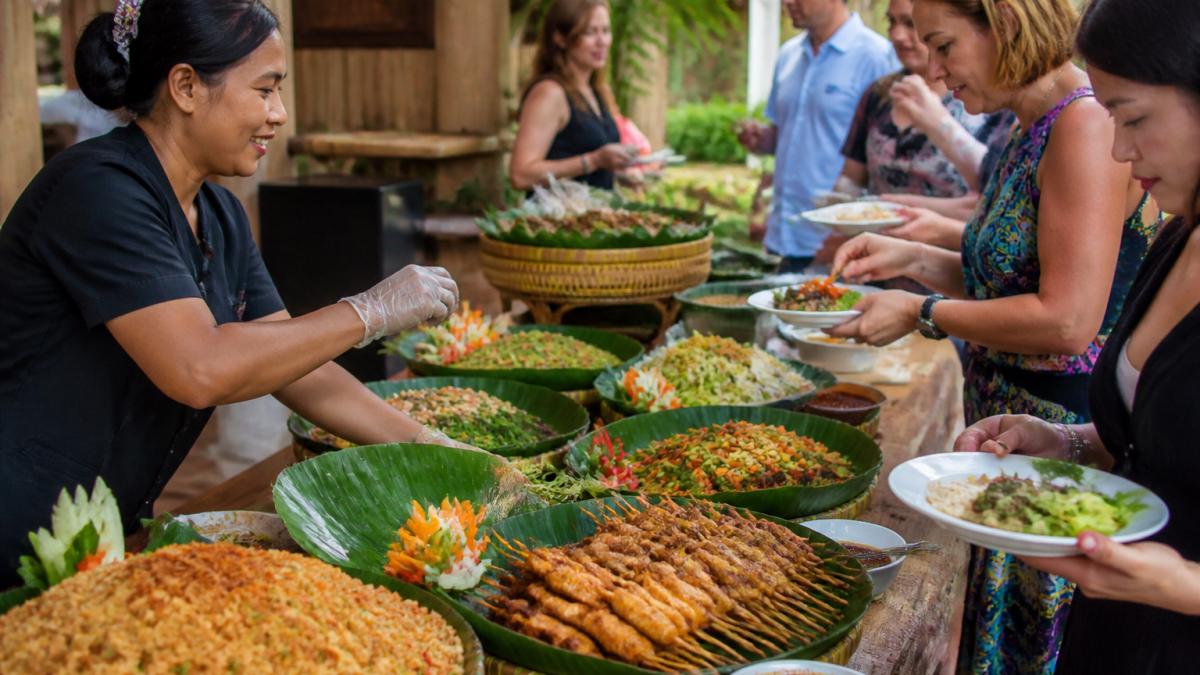
A proper Indonesian buffet is built on layers: start with rice, add proteins, then balance with vegetables and sambals. This structure is easy to portion, serve, and understand.
Rice dishes as the foundation
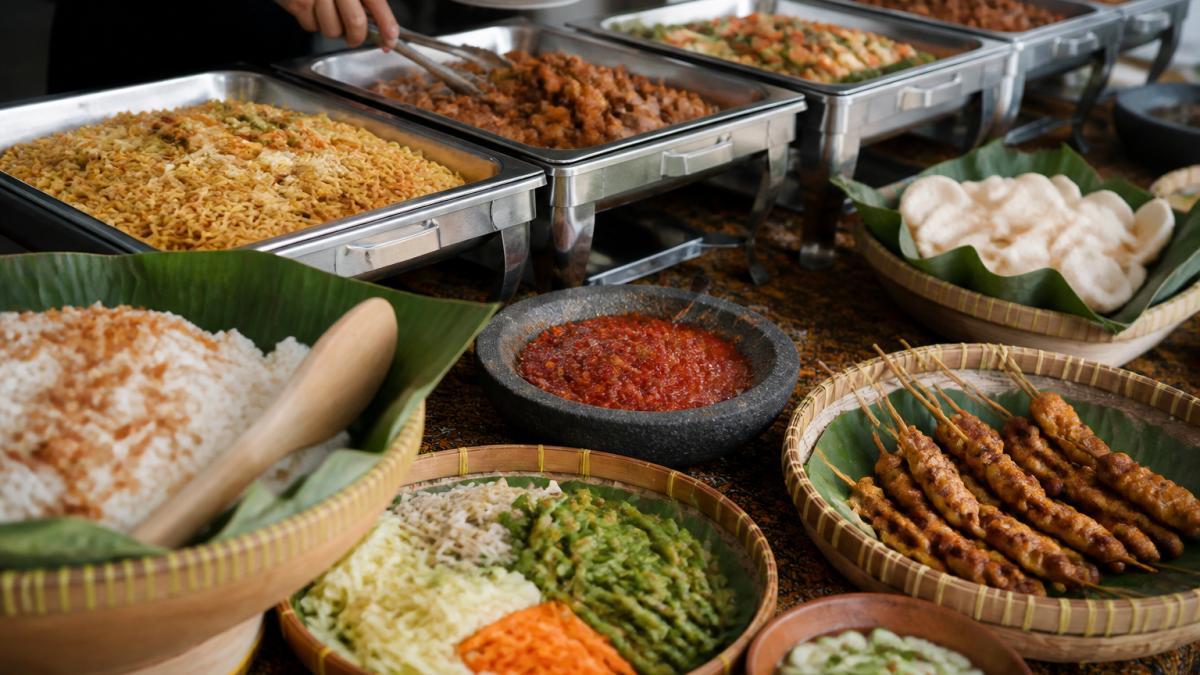
Rice is the anchor. Without it, you don't have a proper Indonesian meal. Nasi goreng (fried rice) and nasi campur (mixed rice) are the two workhorses of catering.
Nasi goreng is fried rice cooked with shallots, garlic, and soy sauce, often with egg mixed through, simple, filling, and instantly recognisable. Nasi campur uses the same base with separate toppings on the side: boiled egg, cucumber, fried shallots.
Protein mains that feed a crowd
Sate ayam (chicken satay) is the obvious choice: grilled skewers with peanut sauce, forgiving to serve, easy to eat standing up, and universally popular. Rendang, slow-cooked meat in coconut and spice paste, is rich, impressive, and unmistakably authentic.
For a mixed crowd, include both chicken and beef. Some people avoid pork, so a clear alternative matters. Perkedel (potato croquettes) work as a vegetarian protein and add textural variety.
Vegetables and sambals for balance
Gado-gado (vegetable salad with peanut sauce) is essential, colourful, fresh, and light enough to balance the heavier dishes. Urap (shredded vegetable salad) does similar work with a different flavour profile.
Sambals are the finishing touch: spice pastes like sambal matah (raw chilli and shallot) and sambal oelek (chilli paste). Small in quantity, massive in impact, one spoonful transforms a plate.
Indonesian Finger Food and Snacks for Grazing
Not every event needs a sit-down buffet. Sometimes you want food people can eat while they mingle, Indonesian finger food does this beautifully.
Lumpia (spring rolls) are the classic, fried or fresh, meat or vegetable, compact and satisfying.
Bakso (meatball soup) can be served in small cups, eaten with a spoon, warm, filling, and more substantial than typical finger food.
Indonesian Vegetarian Catering Options
The assumption that Indonesian food is meat-heavy is wrong, vegetables are central, not an afterthought.
Gado-gado is the star: a complete meal of boiled vegetables, tofu, and peanut sauce.
Tahu goreng (fried tofu) and tempeh goreng (fried soya bean cake) provide protein without meat, absorb flavour beautifully, and work well in a mixed buffet where everyone eats the same food.
For a fully vegetarian event, nasi goreng made with vegetables instead of meat works perfectly. Add a sambal on the side and it's complete.
Designing an Indonesian Wedding Catering Menu
Weddings are different: people expect formal presentation but also food that tastes genuine. The balance is tricky.
Start with a statement dish: rendang is perfect, impressive, slow-cooked, showing you've invested time.
Include sate ayam for its reliable popularity, gado-gado for freshness and colour, and a sambal with fried shallots for texture.
For dessert, es cendol (coconut and palm sugar ice) is refreshing, authentically Indonesian, and feels special without being fussy.
Practical Catering Logistics: Serving, Timing, and Dietary Needs
Good food means nothing if it arrives late, sits at the wrong temperature, or leaves a guest with an allergy unable to eat safely. Here's how to plan it properly.
A make-ahead timeline that actually works
Indonesian food is unusually forgiving for catering because many dishes improve with a rest. A common pattern for an evening event:
- Two days before: make rendang and refrigerate. It genuinely tastes better on day two as the spice paste and coconut milk settle.
- One day before: make sambals (sambal matah, sambal oelek), blanch and cool vegetables for gado-gado, and fry perkedel and lumpia, then refrigerate. Reheat fried items in a hot oven rather than a microwave so they stay crisp.
- Morning of the event: cook nasi goreng and nasi campur, portion into trays, and refrigerate. Cook satay skewers and hold them raw or par-cooked.
- Two hours before service: move hot dishes into insulated containers. Grill satay on site if you can, the smell is part of the experience.
- Thirty minutes before service: set out cold items (gado-gado components, urap, fresh sambals) and combine peanut sauce just before guests arrive.
Serving temperatures and holding
In practice:
- Hot dishes (rendang, nasi goreng, satay, bakso) belong in insulated chafing dishes or thermal carriers. If you are using chafing dishes, pre-heat the water before adding food.
- Room-temperature dishes (gado-gado, urap, fried shallots, sambals) can sit out for the length of a normal service but should be topped up from the fridge rather than left out all night.
- Cold dishes (es cendol, fresh fruit, salads) should stay in an esky or on ice until the dessert course.
Allergens and dietary requirements, dish by dish
Indonesian food is adaptable, but know where the traps are:
- Peanuts. Satay sauce, gado-gado dressing and some sambals are peanut-based. A coconut-milk and roasted-cashew or sunflower-seed version works as a substitute, but it must be prepared separately with clean utensils. Flag this to your caterer at the quoting stage, not the day before.
- Gluten. Standard soy sauce (kecap manis and kecap asin) contains wheat. Tamari is a direct gluten-free swap. Note that kecap manis is also sweetened, so you may need to adjust sugar in recipes.
- Shellfish. Terasi (fermented shrimp paste) hides in many sambals and some vegetable dishes. It is not always obvious from the dish name, so ask specifically.
- Egg. Nasi goreng, nasi campur and perkedel often contain egg. It is easy to make egg-free versions, but they need to be prepared as separate batches.
- Dairy. Most Indonesian cooking uses coconut milk rather than dairy, so dairy-free guests are usually well catered for. Watch desserts, some use condensed milk.
Vegetarian and vegan guests
Build vegetarian options first, then add meat. Gado-gado, urap, tahu goreng, tempeh goreng and vegetable nasi goreng form a complete vegetarian spread. For vegan guests, check that no egg or shrimp paste has been used, both are common in otherwise vegetable-based dishes.
Portion sizing that matches the earlier guidance
Earlier we suggested generous portion sizes for a full self-serve buffet. For a cocktail-style event with substantial finger food, adjust quantities accordingly.
To sanity-check your plan: for every 10 guests, aim for one rice dish, one protein dish, one vegetable dish and one sambal. Scale the number of dishes with the guest count rather than portions of a fixed menu, variety makes an Indonesian buffet feel generous.
Budgeting and Cost Considerations for Indonesian Party Food
Cost matters. Good catering isn't cheap, and cheap catering usually isn't good. The useful question isn't "what does it cost per head?" but "what drives the price up or down?"
What drives the price
Most Indonesian catering quotes move on five factors:
- Guest count. Larger events usually mean a lower cost per head because fixed costs (travel, setup, staff) are spread across more people.
- Protein choice. Chicken and tofu-based dishes are the most economical. Beef rendang costs more because of the cut and the long cooking time. Seafood and lamb push the price up further.
- Menu breadth. A tight menu of four or five dishes is cheaper than a broad spread of ten. Each additional dish adds prep time, ingredients and serving equipment.
- Service style. Drop-off catering (food delivered in trays, you serve) is the most affordable. Buffet with staff to replenish and clear is mid-range. Plated, course-by-course service is the most expensive because it needs more staff and more time on site.
- Date and location. Weekend evenings and peak wedding season attract a premium. Delivery distance and venue access (stairs, no kitchen, tight load-in windows) also affect the quote.
How to frame a budget
Rather than anchoring on a single per-head number, think in tiers:
- Casual or community event: a focused menu of rice, one protein, one vegetable and a sambal, drop-off style. This is the most budget-friendly option and works well for lunchtime or daytime events.
- Mid-range celebration: add a second protein, a second vegetable, finger food for grazing, and buffet service with some staff support.
- Wedding or formal event: a broader menu with a statement dish such as rendang, satay, a dessert such as es cendol, and full buffet or plated service.
What to compare between quotes
When comparing caterers, compare what you're actually getting, not the headline number:
- Are portions generous, or is the quote based on minimal servings per guest?
- Is the food freshly prepared on the day, or reheated from frozen?
- Does the quote include delivery, setup, serving equipment, staff and cleanup, or are those add-ons?
- Does the caterer allow for dietary variations (gluten-free, peanut-free, vegetarian) at no extra cost, or is each one a surcharge?
- What is the deposit and cancellation policy?
Getting an accurate quote
Pricing depends on quantity, date, delivery location and service style: a 40-person community event costs differently from a 150-person wedding, a Friday night from a Sunday afternoon, and a venue outside the metro area from catering at your home.
The best approach is to get a quote. Tell your caterer what you're planning, how many people, the date, the location, and whether you want drop-off, buffet or plated service, they'll price your actual event rather than a generic estimate.
Frequently Asked Questions
What are the most popular Indonesian dishes to serve at a party?
Nasi goreng, nasi campur, sate ayam, rendang, and es cendol are crowd favourites for catering. Nasi goreng and nasi campur offer familiar comfort-food appeal, whilst sate ayam provides a shareable main that guests enjoy. Rendang delivers rich, slow-cooked flavour, and es cendol serves as a refreshing dessert. A balanced Indonesian party food catering menu typically combines two to three rice dishes with at least one protein main and fresh vegetable sides for variety and colour.
How can you cater for vegetarian guests with Indonesian food?
Indonesian vegetarian catering is straightforward because the cuisine naturally celebrates vegetables. Gado-gado (vegetable salad with peanut sauce), lumpia (spring rolls), and vegetable curries are hearty and satisfying. Tempe goreng (fried tempe) and vegetable sambal dishes add protein and flavour without meat. Serve these alongside rice dishes and ensure your buffet clearly labels vegetarian options. Many traditional Indonesian dishes are easily adapted, ask your caterer about vegetable-based rendang, vegetable soto (soup), and bean-based curries.
How do you plan an Indonesian buffet menu for a crowd?
Start with a rice foundation: nasi goreng and nasi campur are reliable anchors that feed many. Add two to three protein mains (sate, rendang, or fried chicken). Include fresh vegetable dishes, sambals, and pickles for balance and colour. Plan for generous portions, authentic Indonesian catering delivers substantial servings. Consider your guest count and dietary needs early; communicate these to your caterer so they can adjust quantities and prepare alternatives.
What should you know about serving temperatures and make-ahead preparation for Indonesian catering?
Most traditional Indonesian dishes are forgiving and hold temperature well. Nasi goreng, rendang, and curries can be prepared ahead and gently reheated; rice dishes stay warm in covered containers for 2-3 hours. Sambals and fresh vegetable salads are best assembled close to service time to maintain crispness. Fried items like sate and lumpia are best prepared fresh but can be held warm in a low oven. Communicate timing with your caterer; they'll manage transport, setup, and temperature control so your guests enjoy hot, fresh food throughout the event.