
Last Updated: November 8, 2026
Quick Summary
To organise festival catering, first define your event's purpose, audience and hours, then set a budget, build a timeline working back from the event date, calculate portions, plan for dietary needs and food safety, and sign a written contract. Start planning at least six months ahead.
- Start your festival catering timeline at least six months before the event.
- Plan food for the share of attendees who will actually buy it, then add a buffer.
- Keep a backup reserve of 10-15% of the main dish for a late surge.
- Ask each caterer for their food safety plan and evidence of food handler training.
- Get all contract terms, including cancellation and changes, confirmed in writing.
Table of Contents
- Define Your Festival's Purpose and Catering Goals
- Set Your Festival Catering Budget
- Build a Festival Catering Timeline
- How to Calculate Food Portions for an Event
- Plan for Dietary Needs, Food Safety and Waste
- Agree Festival Catering Contract Terms
- Book Your Festival Caterer and Confirm the Plan
- Frequently Asked Questions
Define Your Festival's Purpose and Catering Goals
Good festival catering starts with a clear purpose, not a menu. Ask what the event is for, who will be there and what success looks like.
Our first step is always the same: confirm the audience, the hours and the number of people who will be buying food.
- Purpose: Fundraising, community connection, or a free event for families
- Audience: Children, families, older residents, or a mixed crowd
- Goal: Sell food, feed volunteers, or serve a free meal
- Hours: Lunch only, or a full day from morning to evening
A clear goal keeps the menu simple. A fundraiser that sells food needs quick service and dishes people can eat while walking. A volunteer lunch needs generous portions and enough variety to suit different tastes.
Set Your Festival Catering Budget
Your catering budget decides almost everything else, from the number of stalls to the menu. Pricing depends on quantity, dates and delivery, so we give quotes based on your event rather than a fixed rate card. Visit our website for current prices or to request a quote.
Most community groups should set the budget before they invite caterers. Use this simple breakdown:
- Food and ingredients: The largest cost for most events
- Service and staff: Setup, serving and packing down
- Equipment: Hot holding, gas, power and serving items
- Permits and insurance: Check what your council and venue require
- Contingency: Keep a small buffer for extra guests or bad weather
Ask caterers to split their quote into these lines. A clear breakdown makes it easier to compare offers and spot where you can cut costs without cutting quality. If your group has a tight budget, consider a smaller menu or fewer dishes.
Build a Festival Catering Timeline
Start your festival catering timeline at least six months before the event. A first-time food event needs even more lead time.
Work backwards from the event date and set these milestones:
- Twelve to six months out: Confirm the date, venue and organising team.
- Three months out: Shortlist caterers, request quotes and check food safety plans.
- Six weeks out: Sign the contract and confirm the final menu and guest numbers.
- Two weeks out: Confirm delivery times, equipment and staff roster.
- One day before: Check the site, power points and water access with the caterer.
Missing an early deadline can limit your choice of caterers, especially for popular weekend dates. Book early and treat each milestone as a fixed date.
How to Calculate Food Portions for an Event
Calculating portions is where most community events go wrong. Too little food leaves guests hungry and damages the festival's reputation; too much creates waste and eats into funds you could spend elsewhere. The aim is not a perfect number but a defensible estimate with a planned buffer, backed by a service plan that keeps food moving.
Start with a realistic attendance figure
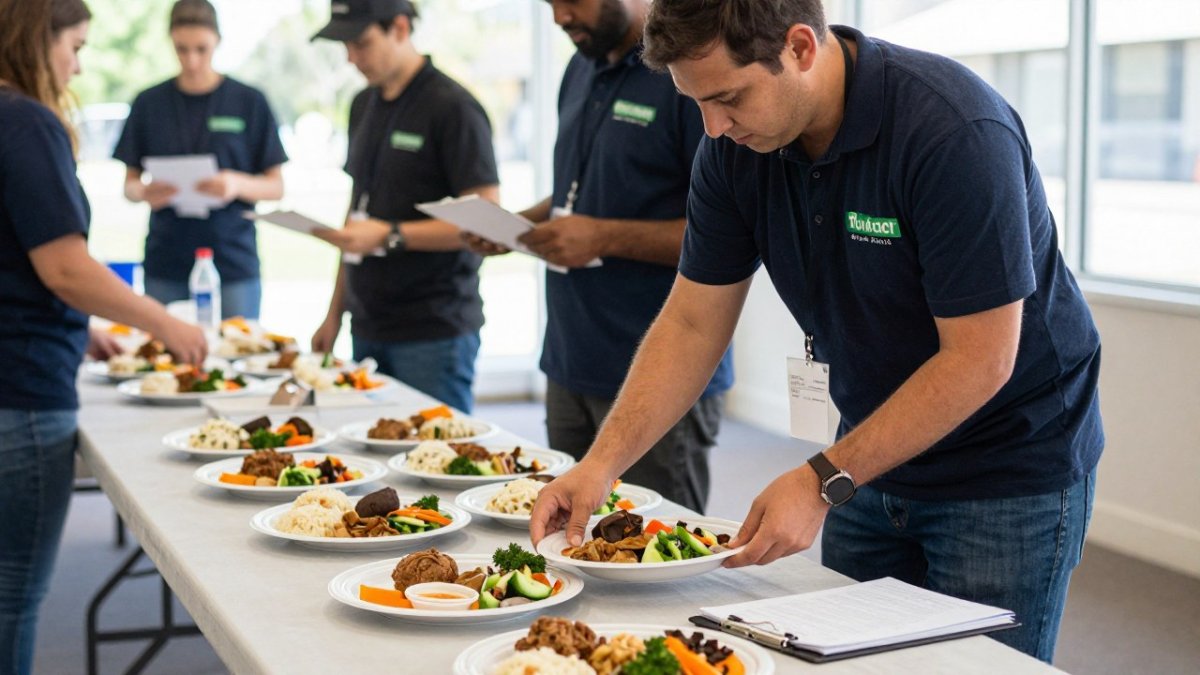
Build your number from three sources rather than one: presales or registrations, the previous year's gate count if the event is recurring, and a foot-traffic estimate from the venue or council. Some attendees at community festivals never buy food, people who eat beforehand, volunteers on shift, performers and stallholders. Plan food for the share of attendees who will actually buy, not the full crowd, then add a buffer.
Estimate per-person quantities by dish type
Portion sizes vary with the food, the time of day and how filling the dish is. As a working starting point for a mixed community crowd:
- Main meal or substantial street-food serve: one serve per buying attendee, with a 10-15% buffer.
- Sides and snacks: roughly 0.5-0.8 serves per buying attendee, since not everyone takes one.
- Dessert or sweet items: roughly 0.4-0.6 per buying attendee.
- Drinks: one to two per attendee across the event, higher on hot days and at evening events.
- Children's serves: smaller portions, but count children as buyers if the event is family-focused.
Multiply each figure by the buying attendance, then add the buffer. Feed volunteers and stallholders separately, a common mistake is to forget the 15-30 people running the event, who often eat at the quietest service moment.
Plan serving capacity, not just food volume
Quantity is only half the problem; the other half is whether your stalls can serve it fast enough. Matching serving capacity to demand keeps queues moving, and the same balance matters when planning a school carnival planning guide.
Watch out: a menu that is too broad for the staff on hand is a more common cause of long queues than running out of food, fewer dishes, prepared faster, usually serve a crowd better than a long menu.
Build in replenishment and backup food
Plan restocking in waves rather than delivering everything at opening. Cold storage and hot-holding capacity limit how much can be held safely at once, so schedule top-ups through the day. Keep a backup reserve, commonly 10-15% of the main dish, held back for a late surge, and agree with the caterer in advance what happens if a dish sells out early: a substitute item, a refund policy or a sign directing guests to another stall.
Use a simple worksheet and learn from each event
A one-page worksheet with columns for dish, estimated serves, buffer, peak-hour capacity and restock time is enough for most community committees. After the event, record what sold out, what was left and when queues peaked.
Our full guide on how to calculate catering portions walks through the method in more detail, with worked examples for different guest numbers and event lengths.
Portion estimates depend on the dish type, so the article suggests these starting points for a mixed community crowd.
| Dish type | Starting quantity | Buffer |
|---|---|---|
| Main meal or street-food serve | One serve per buying attendee | 10-15% |
| Sides and snacks | 0.5-0.8 serves per buying attendee | Not stated |
| Dessert or sweet items | 0.4-0.6 per buying attendee | Not stated |
| Drinks | One to two per attendee | Higher on hot days |
| Reserve of main dish | Held back for a late surge | 10-15% |
Plan for Dietary Needs, Food Safety and Waste
Community festivals serve a wide mix of people, and the catering plan has to protect them. Dietary inclusion, food safety and waste reduction are operational tasks with specific steps, not general good intentions. Handle them before the day, and brief every vendor on the same standard.
Food safety and sanitation
Ask each caterer for their food safety plan and evidence of food handler training before you sign. Confirm the practical controls they will use on site:
- Temperature control: hot food held above 60°C and cold food below 5°C, with a probe thermometer on site and temperature checks logged through the day.
- Handwashing: a dedicated handwash station with soap, running water and paper towels at every stall, not a shared basin used for utensils.
- Cross-contamination: separate chopping boards, utensils and storage for raw and ready-to-eat food, and separate tongs or servers for each dish.
- Potable water: confirm the source and that it is suitable for food preparation and cleaning, not just handwashing.
- Waste and cleaning: bins at each stall, a cleaning schedule and a plan for spills and grease.
Coordinate inspection early. Contact your local council's environmental health team when you lodge permits to confirm what they require for temporary food premises, whether an inspection will occur on the day and what records vendors must hold. Ask the venue whether it has its own food-safety conditions that sit on top of the council's.
Allergen management and labelling
Allergens cause serious harm and are the area most often handled loosely at community events. Require every vendor to provide a written list of the allergens in each dish, using the standard allergen categories, and to display it clearly at the point of sale, on a board, a menu card or a QR-linked page. Staff taking orders must be able to answer allergen questions and know when to say "I need to check" rather than guess.
Dietary inclusion and accessible menus
Plan menus so that every guest has a real choice, not just a side dish. A practical target for a mixed community crowd is at least one vegetarian or vegan main, one gluten-free option and one dish that suits common religious dietary needs, clearly labelled. Label dishes with symbols and plain words, keep ingredient lists available, and make sure at least one stall can serve a simple, allergy-aware option. Accessible service matters too: lower counters for wheelchair users, clear signage and staff who can read the menu aloud.
Waste reduction and sustainable operations
Translate sustainability into steps vendors can actually follow:
- Choose reusable or compostable serviceware and tell vendors what is acceptable before they order stock.
- Set up clearly signed waste stations with separate streams for recycling, organics and general waste, staffed or checked through peak periods.
- Sell portions that are easy to share and avoid over-ordering through the buffer method above.
- Agree a food donation plan before the event for safe, untouched surplus, and confirm which organisation will collect and when.
- Track waste by weight or bin count so next year's plan improves.
Before you hire a caterer, you can check their food safety standards and questions to ask so you know what to expect on the day.
Agree Festival Catering Contract Terms
A written contract protects both your group and the caterer. Do not rely on a verbal agreement, even for a small event. Confirm these points in writing:
- Date, time and location: Include setup and pack-down times
- Menu and portions: List the dishes and the number of guests
- Price and payment: Set the total, deposit and payment dates
- Cancellation terms: Explain what happens if the event is cancelled or moved
- Staffing and equipment: Confirm who brings what
- Food safety and insurance: Confirm the caterer's cover and food safety plan
- Changes: Agree how extra guests or menu changes will be charged
Read the contract carefully before you sign. Ask about anything you do not understand. A good caterer will be happy to explain each term.
Book Your Festival Caterer and Confirm the Plan
You now know your purpose, budget, timeline, portions, dietary needs and contract terms. Use that information to brief your caterer and compare quotes on the same basis.
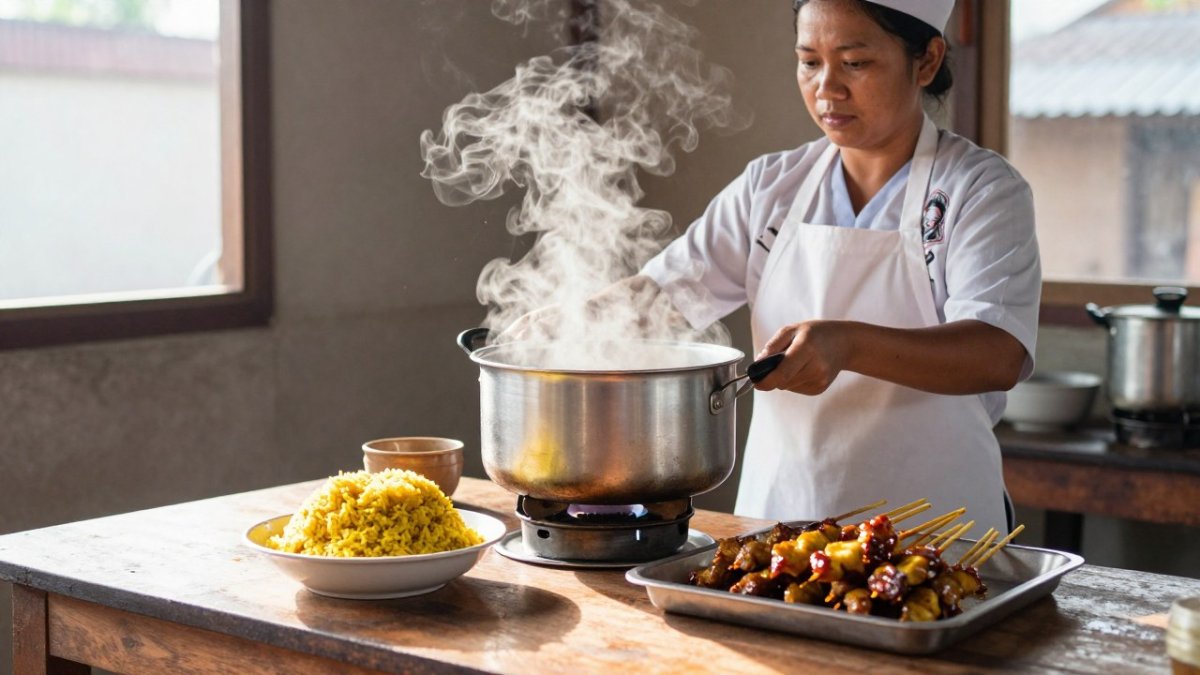
Ninin's Indo Street Food is a family-run business serving Adelaide since 2007, with a food trailer and buffet service for community festivals, school fairs and club events. Our full Indonesian buffet for sports clubs, schools, councils and fundraisers is built to feed the whole crowd. Our food trailer can attend events like yours, so you can find the trailer and join the queue on our website.
When you contact us, share your guest numbers, event hours, dietary needs and budget. We will recommend a menu and give you a quote based on your event. Get your quote and confirm the plan well before your festival, so your team has time to prepare.
Frequently Asked Questions
How do you plan catering for a community festival?
Start by confirming your attendance estimate, budget and food concept, then choose between a single caterer, multiple food vendors or a mix. Set a timeline working back from the event date, confirm permits and food safety requirements, and agree written terms covering quantities, service times and cancellation. Ninin's Indo Street Food can provide a quote based on your numbers, and pricing depends on quantity, date and delivery.
How much food should you order for a community festival?
Base your order on expected attendance, how long the event runs and whether food is the main attraction or one of several options. Ask caterers to plan portions per person and build in a small buffer for popular items. Ordering slightly over is usually safer than running out, though you should agree how leftovers are handled in the contract.
What food safety requirements should festival caterers meet in Australia?
Food vendors at Australian events generally need to comply with the food safety standards that apply in their state or territory, including food handler training, temperature control for hot and cold food, and appropriate handwashing and hygiene facilities. Ask each caterer for their food safety documentation and confirm allergen information is displayed for every dish.
