
Table of Contents
- What's Included in Corporate Catering Packages
- Corporate Catering Menu Options for Different Events
- Understanding Corporate Catering Cost Per Person
- Office Catering Platters: Formats and Selection
- Catering for Dietary Requirements and Allergies
- Delivery, Setup, and Logistics
- Why Authentic Catering Matters for Your Corporate Event
- Frequently Asked Questions
Last Updated: October 11, 2026
What's Included in Corporate Catering Packages
Corporate catering packages bundle food, service, and logistics into a single offering. Understanding what's standard helps you compare options fairly and avoid hidden costs.
Most packages include prepared food, service staff, tableware, utensils, and delivery. Some include setup and breakdown; others charge separately. Quality, portion sizes, staff professionalism, and equipment condition differentiate services.
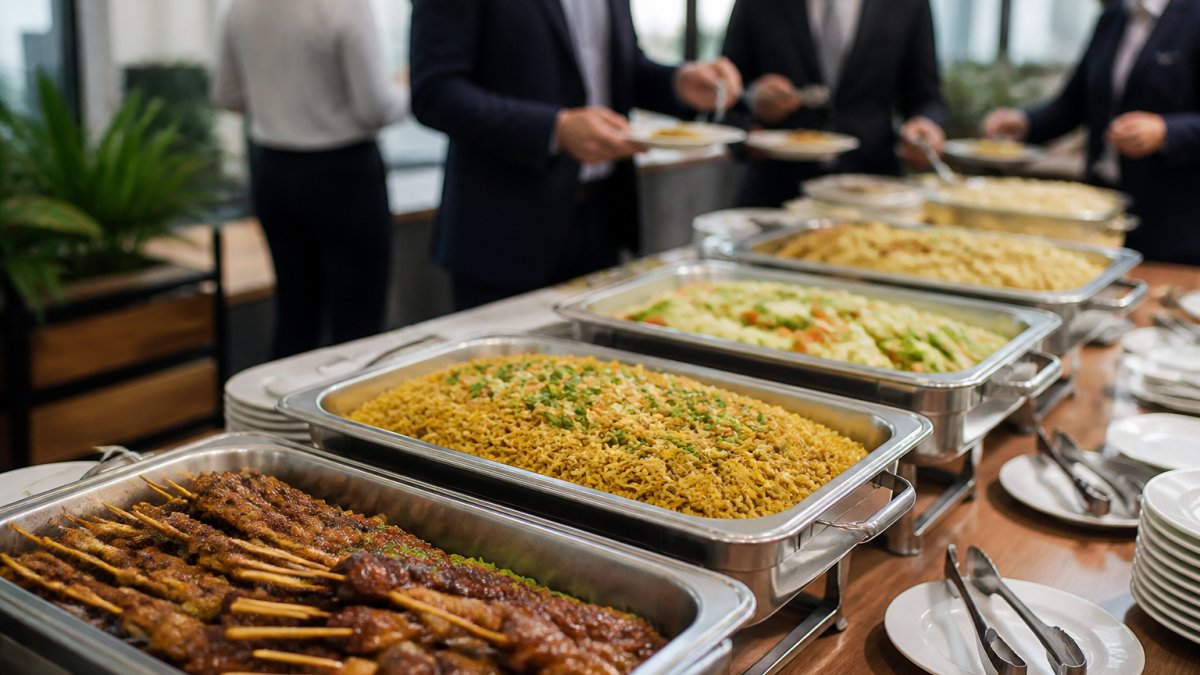
At Ninin's Indo Street Food, we've been handling corporate functions since 2007, and our catering packages reflect what actually matters to event organisers: fresh, generously portioned food that doesn't require shortcuts, flexible service options including our custom food trailer and buffet setup, and a team that shows up on time and ready to work. We build packages around your budget and guest count, not the other way around.
When evaluating corporate catering packages, ask what's included: service staff, serving utensils, platters, setup, breakdown, and dietary accommodations. These details shift the true cost significantly.
Corporate Catering Menu Options for Different Events
The right corporate catering menu depends entirely on your event type, guest preferences, and the impression you want to create. A formal boardroom lunch calls for something different than a casual team training day or an end-of-year celebration.
Formal corporate lunches benefit from plated or elegant buffet options that signal professionalism. Degustation-style menus create premium experiences without excessive time away from business.
Casual team events allow flexible platter and food station formats that encourage mingling. Indonesian cuisine works well here: bold flavours, generous portions, and visual appeal without formal plating.
Breakfast and morning meetings need lighter options. Authentic Indonesian breakfast dishes offer memorable, sustaining alternatives to continental packages.
Conference catering and all-day events require multiple service points and varied menu options to prevent attendee fatigue. Offering choice between a few core dishes, plus vegetarian and dietary-specific alternatives, keeps people engaged throughout the day.
Understanding Corporate Catering Cost Per Person
Cost per person is transparent only when you understand what's included. A $25-per-person package excluding service and setup is not comparable to a $35-per-person package that includes both.
Most services structure pricing in three tiers: Basic platter service ($18-$28 per person, self-service, no staff), Standard buffet with service ($28-$42 per person, includes setup and 2-3 hours staff), and Premium service ($42-$65+ per person, plated courses and extended service).
Multiply the per-person rate by headcount for a baseline cost, but always request a complete quote, per-person rates often exclude service, delivery, dietary upcharges, and equipment hire.
Factors affecting per-person cost: Menu complexity, guest count (larger events have lower per-person rates), delivery distance (beyond 15 km incurs $50-$150 extra), dietary modifications ($2-$5 per person), service duration (over 3 hours incurs extended fees), seasonal demand (peak season costs 10-15% more), and minimum order requirements (20-30 people for platters, 40-50 for buffet with staff).
Request quotes with identical specifications: same guest count, dietary requirements, delivery location, event duration, and service format. This ensures genuine comparison.
Hidden costs to ask about: Service staff (typically $25-$35/hour), setup and breakdown ($150-$300), equipment hire ($30-$80 per item), delivery ($1.50-$3/km beyond free zone), dietary upcharges, and cancellation fees (10-20% within 48 hours).
Create a comparison table with per-person cost, inclusions, minimum order, delivery charge, service staff, dietary options, and additional fees to identify the best value.
Office Catering Platters: Formats and Selection
Platters are economical, visually appealing, and encourage sharing, ideal for team lunches and office functions.
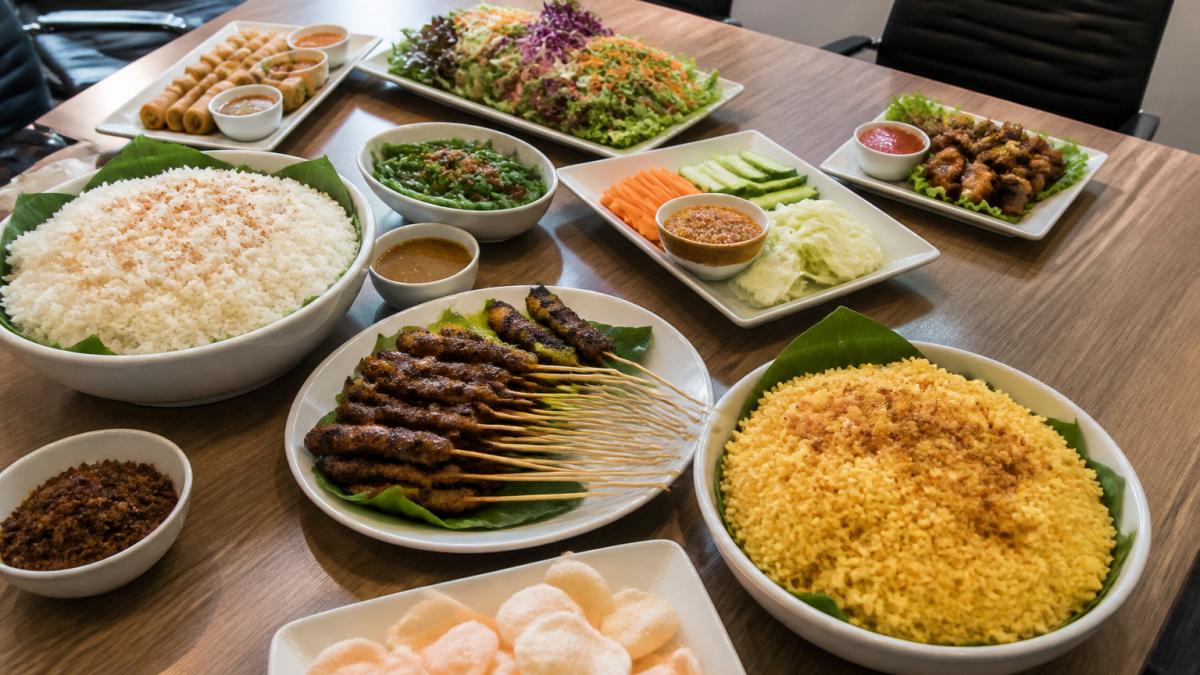
Grazing tables work well for networking functions and training breaks. Shared food feels generous and inclusive while reducing service complexity.
Indonesian cuisine translates beautifully to platter service: satay, rice, vegetables, and salads create visual variety and accommodate diverse tastes.
Match platter size to guest count and duration. Two-hour events need lighter platters; four-hour events need generous portions and variety. Most services offer tiered options: small (20-30 people), medium (40-60), large (80+).
Catering for Dietary Requirements and Allergies
Dietary requirements are standard. Your caterer must handle vegetarian, vegan, gluten-free, and allergen-conscious options without treating them as complications or charging premium prices.
Common requirements include vegetarian (15-25% of guests), gluten-free (5-10%), and dairy-free. Many guests have multiple simultaneous requirements, so your caterer must build satisfying meals within multiple constraints.
Ask: Do you prepare dietary meals separately? Can you provide ingredient lists? Are modifications included or extra? How far in advance do you need information? Professional caterers have reliable systems; those treating it as an afterthought create problems.
Indonesian cuisine has natural advantages: rice-based dishes are gluten-free, vegetable accompaniments are substantial, and fresh ingredients with slow-cooking mean fewer additives.
Delivery, Setup, and Logistics
Logistics determine whether an event runs smoothly. A caterer who arrives late, sets up incorrectly, or leaves a mess reflects poorly on your organisation. Understanding lead times, delivery zones, and ordering windows is essential.
Lead times: Standard bookings require 7-14 days' notice (under 50 people), 14-21 days (50-100 people), 21-28 days (over 100 or custom menus). Peak season (December, September-November) requires 21-28 days minimum. Short-notice bookings (48-72 hours) available for events under 30 people with 10-15% rush fee. Menu customisation requires an extra 7-10 days. Most caterers require 25-50% non-refundable deposit to secure your date, with balance due 3-7 days before.
Delivery zones and charges:
Delivery costs and availability vary significantly by location. Most caterers operate within defined zones:
- Zone 1 (inner suburbs, 0-8 km from base): Delivery included in package price, or flat delivery fee of $0-$30.
- Zone 2 (middle suburbs, 8-15 km): Delivery included for orders over a certain value (typically $300-$500), or charged at $30-$60.
- Zone 3 (outer suburbs, 15-25 km): Delivery charged at $60-$120, or per-kilometre rate ($1.50-$3 per km).
- Regional or remote venues (beyond 25 km): Delivery may not be available, or charged at premium rates ($150-$300+). Some caterers offer a food trailer service for remote venues, which includes delivery and on-site setup.
Always confirm your venue's postcode with the caterer and request delivery in writing. A caterer who's vague about delivery zones or dismissive of your venue location is signalling that they may not service your area reliably.
Setup, service duration, and breakdown:
Confirm these logistics in writing before booking:
- Arrival time: What time will the caterer arrive, and how much setup time do they need (typically 30-60 minutes for platter service, 60-90 minutes for buffet setup)?
- Service format: Will they stay to manage the service and replenish platters, or do they drop and go? If they stay, how long is the service period included (typically 2-3 hours)?
- Extended service: If your event runs longer than planned, what's the hourly rate for extended service (typically $25-$40 per hour per staff member)?
- Venue access: Do they need kitchen access, or can they work from a table? Will they need access to power outlets, water, or refrigeration?
- Setup space: Where will they set up? A boardroom table can't accommodate a full buffet; you'll need a separate service area or a different catering format. Confirm the caterer has assessed your venue and understands the space constraints.
- Breakdown time: How long will breakdown take (typically 20-30 minutes), and will they remove all rubbish and leave the space clean?
- Equipment: What equipment do they bring (serving platters, chafing dishes, utensils, napkins, plates)? What do you need to provide?
Contingencies and problem-solving:
Professional caterers arrive with contingencies: backup equipment, extra serving utensils, supplies for unexpected spills or issues. They know how to work in tight spaces and adapt to venue limitations. Before booking, ask how the caterer handles common problems: What if your event runs 30 minutes longer than planned? What if a guest has an undisclosed allergy? What if the weather forces an outdoor event indoors? A caterer with clear answers and flexible systems is one you can trust on the day.
Cancellation and change terms:
Understand the caterer's cancellation and change policy before you book:
- Cancellations 14+ days before the event: Usually refundable deposit, or small cancellation fee (5-10% of total order).
- Cancellations 7-14 days before: Typically 25-50% of the order value is non-refundable.
- Cancellations less than 7 days before: Usually 50-100% of the order value is non-refundable (the caterer has already purchased ingredients and allocated staff).
- Changes to guest count or menu: Changes within 7 days may incur a fee; changes within 48 hours are usually not possible.
Get the cancellation policy in writing, and purchase event insurance if your event is high-risk (weather-dependent, dependent on attendance, or subject to last-minute changes).
Why Authentic Catering Matters for Your Corporate Event
Corporate catering isn't just about feeding people. It's a reflection of your organisation's values, attention to detail, and respect for your guests' experience. Authentic, carefully prepared food signals that you've invested thought into the event.
Generic catering, mass-produced platters, shortcuts in preparation, reheated components, sends the opposite message. Guests notice. They remember whether they felt genuinely welcomed and cared for, or whether they were fed efficiently but without thought.
Authentic Indonesian catering stands out because it's distinctive, flavourful, and prepared with visible care. It creates conversation. It's memorable. When your clients, team members, or community guests leave your event talking about the food, that's not incidental, it's part of the event's success.
The difference between rushed catering and thoughtful catering comes down to fundamentals: fresh ingredients sourced properly, dishes prepared with time and technique rather than shortcuts, portion sizes that reflect generosity rather than cost-cutting, and service staff who are present and attentive rather than merely present.
At Ninin's Indo Street Food, we've built our reputation over more than a decade by refusing to compromise on these fundamentals. We slow-cook our dishes properly. We use authentic recipes and techniques. We deliver generous portions. We show up on time and manage your event professionally.
Choosing corporate catering packages in 2026 means balancing quality, reliability, budget, and dietary flexibility. The caterer you select should handle logistics professionally, prepare food with genuine care, and treat dietary requirements as standard practice, not complications. Get detailed quotes with identical specifications, ask about what's included before committing, and choose a service that reflects your organisation's values.
Frequently Asked Questions
What is usually included in a corporate catering package?
Corporate catering packages typically include prepared food (mains, sides, or platters), serving utensils, plates, and napkins. Some packages include setup and service staff, while others are drop-off only. Beverage options, desserts, and dietary accommodations vary by caterer. Always confirm what's included before booking, some services charge separately for delivery, setup time, or specialist dietary meals.
How much does corporate catering cost per person?
Corporate catering cost per person depends on menu complexity, guest count, delivery distance, and event type. Breakfast packages may start lower, while multi-course dinners cost more. Pricing also reflects ingredient quality and portion size. Request a quote from your chosen caterer with your guest count and menu preferences to get accurate pricing for your specific event.
How do I cater for vegetarian, vegan, and gluten-free guests?
Inform your caterer of dietary requirements well in advance, ideally when booking. Reliable caterers prepare separate, dedicated dishes to avoid cross-contamination. Request a breakdown of which menu items suit each requirement, and confirm ingredients for hidden allergens. Document any severe allergies in writing to ensure your caterer takes them seriously and handles preparation safely.
How much food should I order for a corporate function?
Order based on event duration and format. A two-hour lunch meeting typically needs less than a full dinner service. Account for appetite variation: office staff may eat lighter than wedding guests. Ask your caterer for portion recommendations based on your guest count and event type. It's better to have modest leftovers than hungry guests, most caterers can advise on safe quantities.