
Last Updated: October 23, 2026
Quick Summary
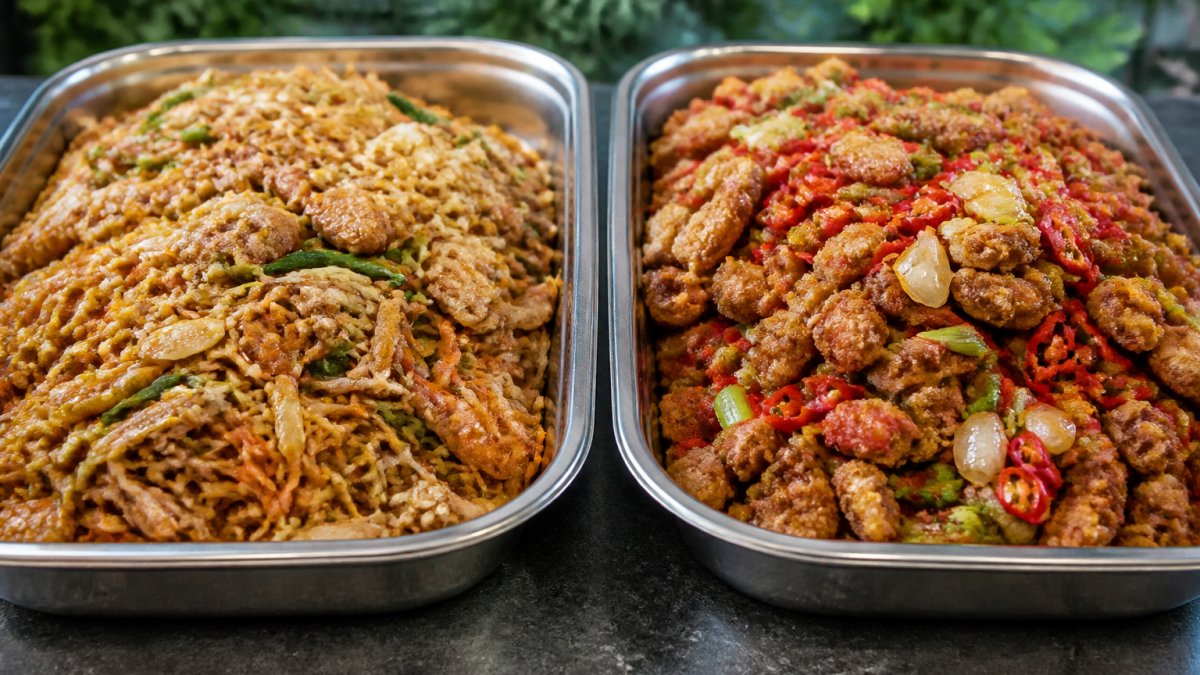
Asian Aussie vs Salt and Chilli represents a choice between two distinct catering styles: salt and chilli is a narrow, high-salt seasoning style from British-Chinese takeaway culture delivering immediate flavour in under 20 minutes, while Asian Aussie blends multiple Asian cooking traditions with Australian ingredients across varied dishes that hold better over 45-90 minutes and offer greater flexibility for dietary requirements.
- Salt and chilli peaks in crispness under 20 minutes and degrades quickly once boxed, whereas Asian Aussie dishes like curries improve with rest and hold well in warming trays.
- Asian Aussie menus naturally accommodate vegetarian, vegan, gluten-free and dairy-free options, while salt and chilli is inherently fried and often contains hidden gluten or dairy.
- For formal weddings, Asian Aussie catering signals intentionality; for corporate events, the satay hut alternative works best; for casual community events, salt and chilli is faster and cheaper.
Table of Contents
- What Are Asian Aussie and Salt and Chilli?
- Flavour, Heat, and Taste Comparison
- Cultural Origins and Food Adaptation
- Indonesian Catering for Weddings and Events
- The Satay Hut Alternative for Events
- Choosing Event Catering Menus: What Works for Your Guests
- Which Option Should You Choose?
- Frequently Asked Questions
What Are Asian Aussie and Salt and Chilli?
Neither phrase is a formal culinary term; both are colloquial labels whose meaning shifts with context, and the comparison between Asian Aussie vs Salt and Chilli reveals how differently they function in event catering.
Asian Aussie describes food blending Asian cooking traditions with Australian ingredients, tastes and serving habits. It is not one cuisine: it can mean a Vietnamese-Australian bakery, a Thai-Australian pub menu or a home cook marrying a family recipe with local produce.
Salt and chilli is narrower: a seasoning and cooking style from British-Chinese takeaway culture, a light, crisp coating of salt, chilli, and often sugar and MSG, applied to chips, squid, prawns, tofu or chicken and flash-fried.
The distinction matters for event planning because the labels promise different things. Salt and chilli promises familiar, punchy, casual flavour most guests recognise. Asian Aussie promises variety, but the actual menu can vary enormously between caterers, two advertising "Asian Aussie" may deliver completely different food, whereas two advertising salt and chilli will usually deliver something recognisably similar.
research on Chinese Australian food practices found that Australians of Chinese ancestry commonly cook with a layered combination of salt, soy sauce, oyster sauce and chilli sauce.
At Ninin's Indo Street Food, we have spent nearly two decades watching how these labels play out in event catering. The choice is less about authenticity and more about which label sets the right expectations for your guests, venue and service style.
Flavour, Heat, and Taste Comparison
A useful comparison separates four things often blurred together: the seasoning, the cooking method, the heat level, and how the food behaves over a service window.
| Dimension | Salt and chilli | Asian Aussie (typical catering menu) |
|---|---|---|
| Core seasoning | Salt, chilli, often sugar and MSG; sometimes five-spice or garlic | Varies by dish: soy, fish sauce, shrimp paste, coconut, lemongrass, galangal, tamarind, sambal |
| Cooking method | Flash-fried, light coating, short cook time | Mixed: slow-simmered curries, grilled skewers, steamed items, fresh salads |
| Heat level | Warm to moderately hot; chilli is present but rarely dominant | Ranges from mild to very hot depending on dish; heat is usually separable |
| Texture | Crisp exterior, tender interior; degrades quickly | Tender, saucy or fresh depending on dish; holds better over time |
| Salt profile | High and upfront | Layered; salt comes from multiple sources across the meal |
| Best service window | Under 20 minutes for peak crispness | 45-90 minutes depending on dish and holding equipment |
| Familiarity for guests | Very high; recognisable to most diners | Variable; depends on the specific cuisine and dish |
Flavour. Salt and chilli is built for immediate impact: salt first, then chilli, then a savoury undertone from the coating and cooking oil.
Heat. Salt and chilli sits in a narrow mild-to-medium band: enough chilli to register, not enough to overwhelm, because the style is built for broad appeal.
Salt. Salt and chilli is by design a high-salt food. Asian Aussie menus can also be high in salt, since soy, fish sauce and shrimp paste are all salt carriers, but it is distributed across dishes rather than concentrated in a coating.
Allergens and dietary considerations. Salt and chilli typically contains gluten in the coating, may contain shellfish from shared oil, and often contains MSG.
Cultural Origins and Food Adaptation
Salt and chilli emerged from British-Chinese takeaway culture in the 1980s and 1990s, where Chinese chefs adapted their cooking to British tastes and ingredients. It crossed into Australia through cultural exchange and takeaway adoption, becoming so embedded that many Australians now consider it a native food category.
The seasoning itself, salt, chilli, and umami-rich sauces, reflects how Chinese cooking adapted to Western preferences for crispy, salty finger foods. It's efficient, forgiving, and designed for quick service in busy takeaway kitchens.
Indonesian catering, including the approach we bring at Ninin's Indo Street Food, draws from centuries of Javanese home cooking and street food traditions. Our family recipes come from Java, refined over generations, and the slow-simmering, spice-layering method reflects a food philosophy where patience and technique create flavour that can't be rushed.
The adaptation here is different: rather than simplifying for Western tastes, we've kept the integrity of the cooking while making it accessible to event catering. Generous portions, customisable heat levels and flexible menus respect both authenticity and the practical needs of event hosts.
Research from SBS Food on Asian seasoning adoption in Australia shows that chilli has been fully adopted into the broader Australian culinary landscape alongside soy and ginger, reflecting how these flavour categories have become naturalised in local food culture over the past two decades. This widespread integration of bold spices suggests that the boundaries of traditional palates are shifting, inviting a deeper exploration of how asian fusion food balances these familiar heat profiles with contemporary culinary expectations.
Indonesian Catering for Weddings and Events
Indonesian catering brings several advantages to weddings and formal events. First, it's visually distinctive. Satay skewers, slow-cooked curries, and fresh sambals create a vibrant, photogenic table that feels special and intentional. Guests recognise they're eating something authentic, not a generic fusion compromise.
Second, it scales elegantly. Slow-simmering in bulk and serving from warming trays maintains quality across the entire service.
Third, Indonesian catering accommodates dietary requirements naturally. Vegetarian options aren't an afterthought but core to the cuisine, and gluten-free and dairy-free dishes can be prepared without compromising flavour. Traditional Indonesian cooking makes this straightforward.
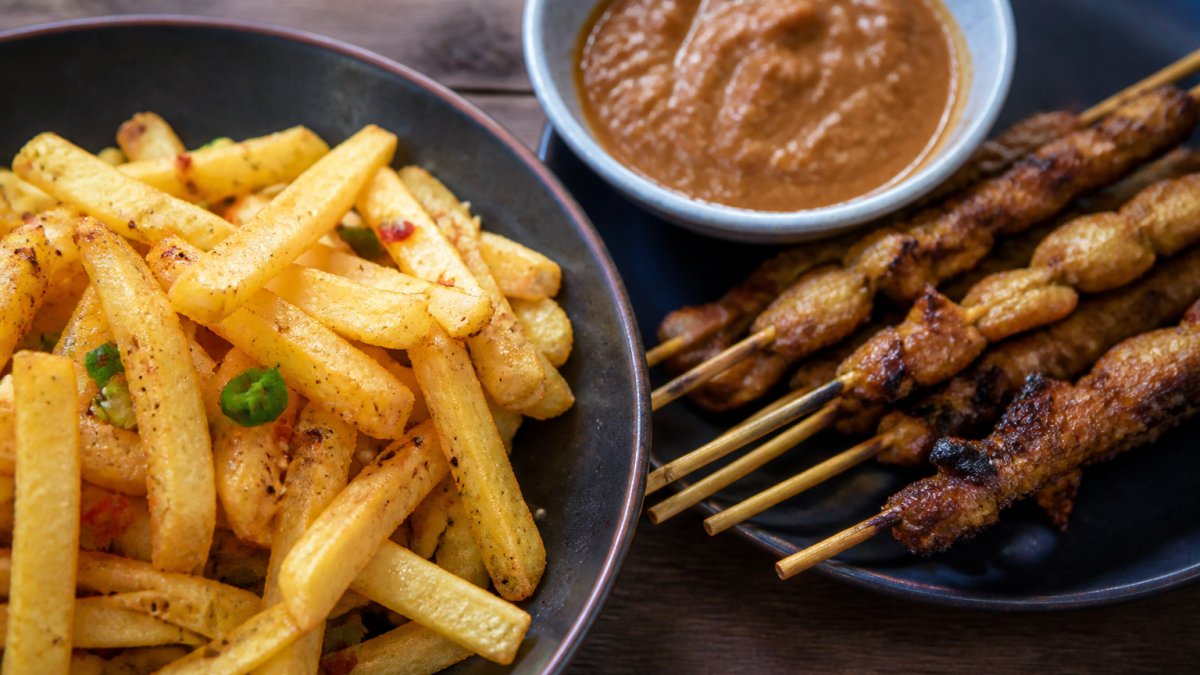
The satay hut alternative for events offers a middle ground between casual takeaway and formal catering: authentic, recognisable food without the complexity of a multi-course sit-down service. Guests can move, mingle and eat at their own pace, which suits modern event styles.
Pricing depends on quantity, dates, and your specific menu choices. We work with budgets ranging from intimate gatherings to large corporate functions, and we customise packages to fit your needs. Contact us for a quote tailored to your event.
The Satay Hut Alternative for Events
The satay hut alternative for events is a popular middle ground between formal catering and casual food trucks, authenticity without pretension, well suited to outdoor events, festivals and casual celebrations.
A satay hut setup, whether a food trailer or buffet service, gives guests agency: they can see the food being prepared, choose their proteins and sauce levels, and eat standing or seated as the venue allows. This informal style suits younger crowds and anyone who values experience over formality.
For the host, the satay hut alternative for events reduces stress: food is ready, guests help themselves, and the focus stays on celebration.
The food trailer brings the kitchen to your venue, useful for outdoor spaces or locations without commercial kitchen facilities, while buffet service works equally well indoors.
The key difference from salt and chilli takeaway is substance: slow-cooked, intentionally prepared dishes rather than quick-service fried items.
Choosing Event Catering Menus: What Works for Your Guests
The choice in Asian Aussie vs Salt and Chilli catering comes down to three factors: your guest profile, the event formality, and your budget.
For formal weddings, Asian Aussie catering wins. Slow-cooked proteins, complex spice blends and generous presentations signal intentionality and create the sense of occasion formal events require.
For corporate events and training days, the satay hut alternative for events works best: it's interactive, guests customise portions and heat levels, and it encourages mingling.
For community events and festivals, either works, but they serve different purposes. Salt and chilli is faster, cheaper, and suits high-volume casual eating.
For dietary accommodation, Asian Aussie catering is significantly more flexible. Vegetarian, vegan, gluten-free, and dairy-free options integrate naturally into the menu.
For budget constraints, salt and chilli is cheaper per serving. But the satay hut alternative for events often represents better value when you factor in quality, portion size and guest satisfaction.
Consider also your venue and service logistics. Salt and chilli requires minimal setup, it can come straight from a takeaway box. Indonesian catering requires warming equipment, serving utensils, and space to set up properly.
Which Option Should You Choose?
Here's the honest answer: if you want authentic, intentional, slow-cooked food, choose Indonesian catering. If you want quick, cheap, casual food that fits a specific informal vibe, salt and chilli works.
But most events sit in the middle: something better than takeaway without formal plated service, flexibility for dietary requirements, and guests feeling you've made an effort without complex logistics.
That's where the satay hut alternative for events shines. You get authentic, quality food. Your guests have agency in what they eat. The service is interactive and fun. And the cooking maintains its integrity across the entire event.
At Ninin's Indo Street Food, we've built our catering around this exact insight. Nearly two decades of refining how to deliver authentic Indonesian food at scale, without shortcuts, means our family recipes, slow-cooking methods and generous portions give your guests something genuine, not just a meal.
The choice between Asian Aussie and salt and chilli isn't really about the seasoning. It's about what story you want your event to tell. Salt and chilli says casual and fun. Indonesian catering says thoughtful and intentional. Choose based on that.
Frequently Asked Questions
What's the main difference between Asian Aussie and salt and chilli catering?
Asian Aussie typically refers to contemporary Asian-fusion dishes adapted for Australian tastes, often lighter and more accessible. Salt and chilli is a specific seasoning style, crispy, salty, with chilli heat, commonly found on chips and fried proteins in Australian takeaway. Both are popular, but Asian Aussie offers broader menu variety, while salt and chilli focuses on that distinctive seasoning profile. For events, Indonesian catering for weddings provides authentic slow-cooked alternatives to both.
Is authentic Indonesian catering a suitable alternative to standard salt and chilli catering?
Yes, if your guests enjoy bold, complex flavours and slow-cooked depth. Indonesian dishes like satay, rendang, and gado-gado offer rich spice blends and tender textures, quite different from the crispy, salty-hot profile of salt and chilli. Check with your catering provider about heat levels and dietary options.
How do I know which catering style will suit my event guests?
Consider your audience's familiarity with Asian food and their spice tolerance. Salt and chilli appeals to those who enjoy familiar, accessible heat on crispy sides. Asian Aussie suits mixed groups seeking variety and mild-to-moderate flavours. When choosing event catering menus, authentic Indonesian options work best for guests open to traditional, slow-cooked dishes and deeper spice complexity. Ask your catering provider for sample menus and dietary information before committing.
Can Asian catering providers handle dietary requirements like gluten-free and vegan?
Many can, but you must ask upfront. Indonesian catering providers often work with soy-based sauces and rice dishes that adapt well to gluten-free and vegan needs. Salt and chilli catering typically focuses on fried proteins and chips, which may limit options. When choosing event catering menus, discuss your guests' requirements early and confirm ingredient lists. Authentic providers like those with thirteen-plus years of experience usually have flexible solutions.
Choosing event catering that genuinely reflects your vision requires more than a price comparison. At Ninin's Indo Street Food, we deliver authentic Javanese recipes, flexible catering options including food trailer and buffet service, and customisable packages built around your budget and event type. Get an instant quote and discover how we can make your event memorable with fresh, slow-cooked Indonesian food that never takes shortcuts.
