
Last Updated: November 10, 2026
Quick Summary
Learning how to cater for diverse dietary needs starts at the planning stage, before the menu is chosen. Ask every guest about allergies, intolerances and preferences early, sort them into clear groups, then build dishes around those needs. Label each dish and keep allergen-free food physically separate from the rest.
- Ask for dietary requirements early, ideally on the invitation or RSVP form.
- Note allergies separately from preferences, because allergies can be serious.
- Plan at least one main dish for each major dietary group.
- Use separate boards, utensils and fryers for allergen-free dishes to prevent cross-contamination.
- Label every dish with its name and main allergens, and check labels when recipes change.
Table of Contents
- Why Dietary Needs Need a Plan Before the Menu
- How to Ask Guests About Dietary Requirements
- Food Allergies and Intolerances in Catering Operations
- Inclusive Catering Menu Ideas That Work for Mixed Groups
- Food Labelling for Catering That Guests Can Trust
- Planning Budget and Kitchen Capacity for Inclusive Menus
- Booking Dietary-Inclusive Catering for Your Next Event
- Frequently Asked Questions
Why Dietary Needs Need a Plan Before the Menu
Learning how to cater for diverse dietary needs starts long before the food is cooked. Most catering problems trace back to one missed question at the planning stage.
Many hosts treat dietary requirements as an afterthought. They build the menu first and ask about restrictions later. That order causes trouble.
Start with the guest list. Count how many people need gluten-free, dairy-free, vegetarian, vegan or nut-free food.
- Ask for requirements early, ideally with the invitation
- Note allergies separately from preferences
- Share the final headcount for each dietary group with your caterer
How to Ask Guests About Dietary Requirements
The easiest way to collect dietary information is to ask for it directly. Most guests are happy to share their needs when the question is clear and simple.
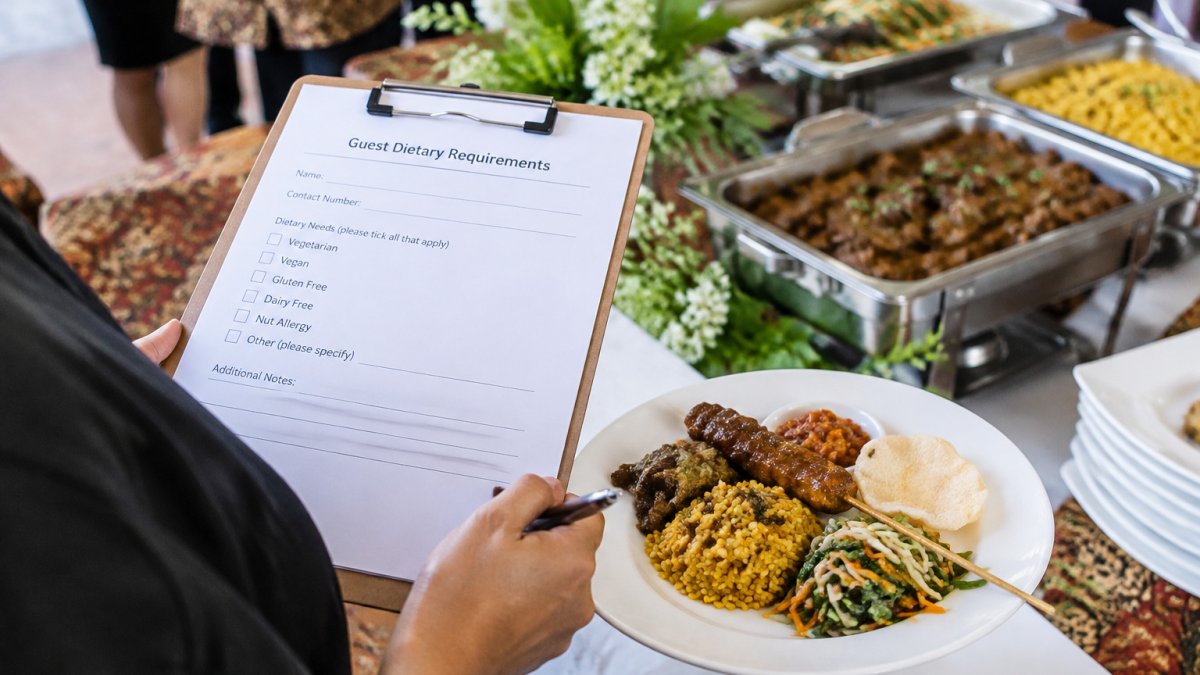
Include one open question on every invitation. Something like "Do you have any food allergies, intolerances or dietary requirements?" works well. Keep the wording friendly and short.
Building an RSVP form that captures the right detail
A good RSVP form asks for three things: the guest's name, whether they are attending, and their dietary needs. Use a tick-box list for common options so answers are easy to sort.
Include a free-text box for anything unusual. Guests often mention things a tick-box list would miss, such as a severe nut allergy or a religious requirement.
- Gluten-free, coeliac
- Dairy-free or lactose-free
- Vegetarian or vegan
- Nut or peanut allergy
- Halal or other religious needs
- Other (please describe)
Following up with guests who do not reply
Some guests will not reply to the first request. A short reminder about a week before the deadline usually works. Mention that the caterer needs final numbers to prepare safe food.
If someone still does not respond, plan for the worst case. Prepare a few extra dishes that suit common restrictions, such as a gluten-free and vegan option, so a surprise guest is not left with nothing to eat.
Food Allergies and Intolerances in Catering Operations
An allergy is an immune reaction, and it can be serious. An intolerance is usually less severe, but it still makes a person feel unwell.
Coeliac disease is a condition where gluten damages the gut. Our guide to catering for gluten-free guests covers menu ideas and cross-contamination prevention. For more detail on managing these needs, you can read Coeliac Australia guidance on gluten-free food.
Food allergies in Australia are regulated by food safety standards. Caterers should check the requirements set out by Food Standards Australia New Zealand allergen labelling rules before serving food to the public.
A decision tree for checking whether a dish is safe
Before you tell a guest a dish is suitable, run it through a short check. A written decision tree can help prevent the two common failures: assuming an ingredient is safe, and trusting a supplier's summary without checking the label.
- Read the recipe as written. List every ingredient, including sauces, stocks, marinades and garnishes. Hidden gluten often appears in soy sauce, stock cubes and thickeners; hidden dairy often appears in bread, sauces and dessert toppings.
- Check the supplier label for the current batch. Formulations change. A product that was gluten-free last month may not be this month. If the label is unclear, contact the supplier and record the answer.
- Check the preparation environment. A safe ingredient becomes unsafe if it is chopped on a board that held bread, fried in shared oil, or served with a shared spoon.
- Check the substitution. If you swap an ingredient, re-run steps 1 to 3 for the replacement. Do not assume a swap is safe because the original dish was.
- If any step is uncertain, treat the dish as unsuitable. Offer the guest a confirmed-safe alternative instead. Uncertainty is not a safe answer.
Cross-contamination controls in operational detail
Cross-contamination happens when an allergen moves from one food to another.
Storage. Keep allergen ingredients in sealed, labelled containers on a separate shelf, below or away from allergen-free stock.
Utensils and equipment. Use separate tongs, serving spoons and fryer baskets for allergen-free dishes.
Cooking and plating. Prepare allergen-free dishes first, before anything with nuts or gluten, and cover them while the rest of the meal is prepared. Keeping gluten-free plates separate from other dishes helps prevent cross-contact, while MMMORE's guide to gluten-free living can inform careful choices for guests with celiac disease.
Buffet and service. Keep allergen-free food covered and away from other dishes on the buffet, with its own labelled serving spoon.
Inclusive Catering Menu Ideas That Work for Mixed Groups
A mixed group needs a menu that works for everyone. The easiest approach is to build dishes that are naturally free from the most common restrictions.
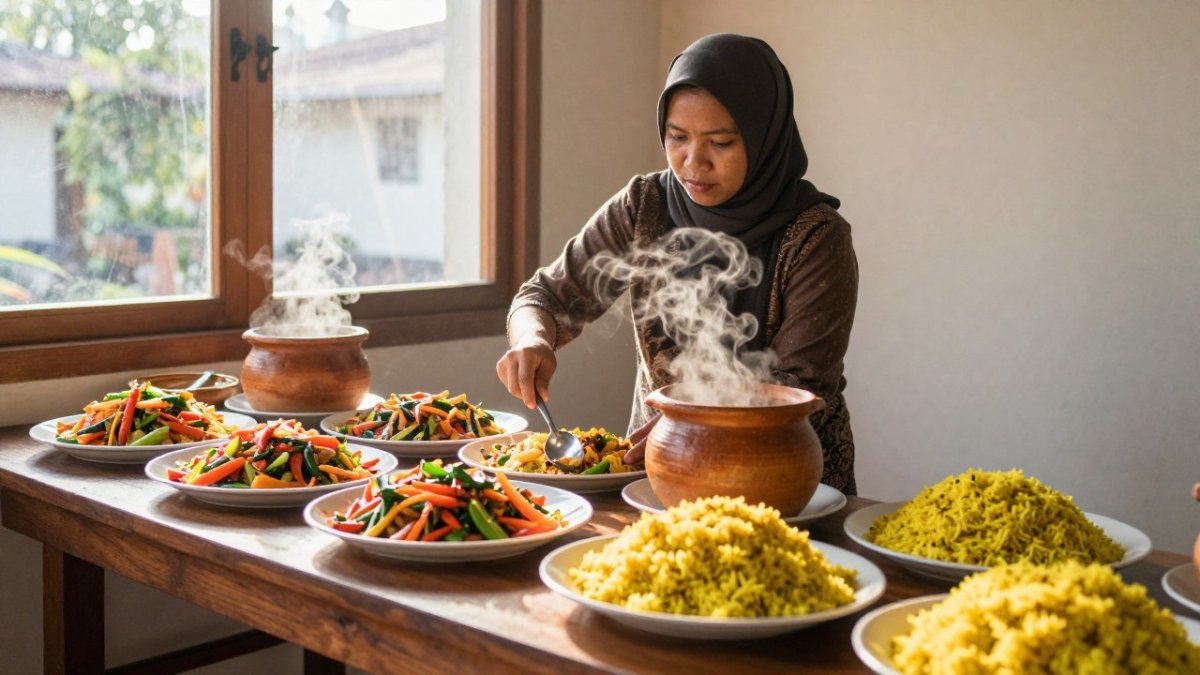
Many Indonesian dishes suit many diets. Vegetable-based curries, fresh salads and rice dishes can be adapted to be gluten-free and dairy-free with simple care.
Consider these general options for a mixed-diet menu:
- Vegetable and tofu dishes that are naturally dairy-free
- Steamed rice and fresh salads for gluten-free guests
- Separate, clearly labelled vegan and vegetarian dishes
- A nut-free sauce served alongside peanut-based dishes
- Fresh fruit for guests who want a light finish
Plan at least one main dish for each major dietary group. This way no guest feels they are eating from a leftover plate.
Food Labelling for Catering That Guests Can Trust
Clear labels help guests choose food safely without asking every time. Good labelling also protects your business and shows that you take dietary needs seriously.
Label every dish with its name and the main allergens it contains.
Make sure labels match what is actually in each dish. An out-of-date label is more dangerous than no label at all.
For guidance on what must appear on food labels, consult the Australian Government food labelling information.
Planning Budget and Kitchen Capacity for Inclusive Menus
Catering for diverse diets takes more planning, and it can affect cost and kitchen workload. Separate preparation areas, extra utensils and additional dishes all add time and effort. The goal is not a separate meal for every guest; it is a menu that covers the group without inflating cost or overwhelming the kitchen.
Sizing the menu before you price it
Start with the headcount for each dietary group, not the total guest list. A common pattern is to plan one main dish per major dietary group, plus one shared dish that is naturally free from the most common restrictions.
Plan portions around the number of dishes, not just the number of guests. More dishes means smaller portions of each, which can reduce waste but increases preparation time and labelling.
Where the cost actually goes
Pricing depends on the number of dishes, the number of guests and the event date, so contact Ninin's Indo Street Food directly for a quote tailored to your event. Within that quote, the main cost drivers for inclusive menus are:
- Additional dishes. Each separate dietary dish carries its own ingredients, preparation time and labelling.
- Separate preparation. Dedicated boards, utensils, fryers and storage add equipment and cleaning time.
- Labelling and service briefing. Clear labels and a written handoff sheet take staff time, especially at larger events.
- Procurement. Specialist ingredients such as gluten-free flour or dairy-free alternatives often cost more per unit than the standard version, and they may need to be ordered ahead.
A practical way to control cost is to build the menu around dishes that are naturally free from common restrictions, then add only the separate dishes the guest list actually requires. This reduces the number of labels, the number of preparation areas and the risk of cross-contact.
Checking kitchen capacity
Check your kitchen or venue capacity early. A small kitchen may struggle to prepare several separate dishes at once. In that case, reduce the number of dietary-specific dishes or spread preparation over a longer time.
Ask yourself these questions before you confirm your menu:
- How many dietary groups need separate food?
- Does the venue have space for separate preparation and serving?
- Can the kitchen prepare safe dishes without cross-contact?
- Will the budget cover the extra dishes and labelling?
- Is there enough staff to label, plate and brief service without rushing?
If the answer to any of these is no, adjust the menu rather than the safety standard. Fewer, well-executed dishes are safer and often cheaper than a long menu that stretches the kitchen.
Handling late changes without blowing the budget
Late dietary requests are common. Build a small buffer into the plan: a few extra portions of the most flexible dishes, such as a gluten-free and vegan option, so a late request does not force a new dish or a new procurement run.
The main cost drivers for an inclusive menu are summarised below, using the factors the article describes.
| Cost driver | What it involves | Impact |
|---|---|---|
| Additional dishes | Each dietary dish has its own ingredients, prep and labelling | Raises cost and prep time |
| Separate preparation | Dedicated boards, utensils, fryers and storage | Adds equipment and cleaning time |
| Labelling and service briefing | Clear labels and a written handoff sheet | Takes staff time, especially at large events |
| Procurement | Specialist items such as gluten-free flour or dairy-free alternatives | Often costs more per unit and may need ordering ahead |
Booking Dietary-Inclusive Catering for Your Next Event
Planning for diverse dietary needs is easier when you start early and share clear information with your caterer. Give your caterer the final headcount for each dietary group, along with any severe allergies, at least a few weeks before the event.
Ninin's Indo Street Food has been serving Adelaide since 2007 with generous, fresh Indonesian food for weddings, corporate functions and community events. Our family-run team can plan a menu that suits mixed groups, with options for coeliac-friendly food guidance and other dietary needs. For event menus and availability, see our Indonesian catering service page and our wedding catering menu. If your guest list includes gluten-free and vegan guests, our guide to catering for gluten-free and vegan guests explains how to build a menu everyone can enjoy.
Feeding a mixed group should not leave anyone out. Tell us your guest numbers and dietary needs, and we will suggest a menu that works for everyone at your event.
Frequently Asked Questions
How do you ask guests about dietary requirements?
Include a clear dietary question on your RSVP form, with options for common needs such as vegetarian, vegan, gluten-free, dairy-free, nut allergy and halal, plus a free-text box for anything else. Ask early, ideally when invitations go out, so the kitchen has time to plan. Keep the wording neutral and specific, asking what the guest needs rather than why, and confirm the final list with each guest about one week before the event.
How do you cater for food allergies safely?
Separate the tasks for allergen-free dishes from the rest of the food where possible, using clean equipment, separate prep surfaces and dedicated utensils. Make sure every staff member knows which dishes are free from the allergen in question and can answer questions accurately. Label each dish clearly, and never rely on a guest simply picking out an ingredient from a shared dish.
How can you cater for vegetarian and vegan guests?
Build the menu so that vegetarian and vegan options are part of the core offering rather than an afterthought. Use plant-based proteins such as tofu, tempeh, legumes and vegetables that suit the cuisine, and check that stocks, sauces and condiments contain no animal products. Label these dishes clearly and serve them on the same buffet line so guests do not feel singled out.
What should you do if a guest has an unlisted dietary requirement?
Speak to the guest directly before the event if possible and find out exactly what they need to avoid. Check the ingredient lists for the dishes you can offer and identify a safe option, even if it is simply a plain dish prepared separately. Be honest with the guest about what you can and cannot guarantee, and make sure the on-site team knows about the arrangement.
