
Table of Contents
- Understanding Your Gluten-Free Guests' Needs
- Questions to Ask Guests About Dietary Requirements
- Planning a Menu With Your Gluten-Free Guest in Mind
- Gluten-Free Menu Ideas and Naturally Safe Foods
- Preventing Cross-Contamination Gluten-Free During Preparation and Service
- Your Gluten-Free Catering Checklist
- Checking Ingredient Labels and Hidden Sources of Gluten
- Frequently Asked Questions
Last Updated: October 14, 2026
Understanding Your Gluten-Free Guests' Needs
Understanding how to cater for gluten free guests means knowing why they avoid gluten and how that shapes your preparation. The first step is always the same: know what you're accommodating.
Gluten sensitivity affects people differently, some face serious consequences from trace amounts, others have mild reactions. The difference matters for how carefully you handle their food.
Coeliac disease, wheat allergy, and gluten sensitivity: what's the difference?
Coeliac disease is an autoimmune condition where gluten damages the small intestine.
Wheat allergy is an immune response to wheat protein, not gluten specifically.
Gluten sensitivity (non-coeliac gluten sensitivity) causes digestive discomfort without the autoimmune damage of coeliac disease. It's real, but typically less severe.
The practical takeaway: ask which one applies. Coeliac disease needs complete separation from gluten; wheat allergy may allow more flexibility.
Questions to Ask Guests About Dietary Requirements
Don't guess. Ask directly and early.
Include a dietary requirements question when you send the invitation, not the week before.
Here's what to ask:
- Do you have any dietary requirements or food allergies?
- If yes, what specifically do you need to avoid?
- Is this due to coeliac disease, allergy, intolerance, or preference?
- Are there any foods you particularly enjoy that we could include?
The last question matters: it shows you're thinking of them as a guest, not just a restriction, and gives you menu ideas.
Write down every answer, keep a list, and share it with anyone preparing food. Don't rely on memory.
Planning a Menu With Your Gluten-Free Guest in Mind
When planning how to cater for gluten free guests, start with naturally gluten-free foods and build your menu around what's already safe, then add gluten-free versions of dishes that normally contain gluten.
This is simpler than it sounds, many proteins, vegetables, and grains are naturally gluten-free.
Your event type, buffet, plated dinner, or shared table, carries its own cross-contamination risks.
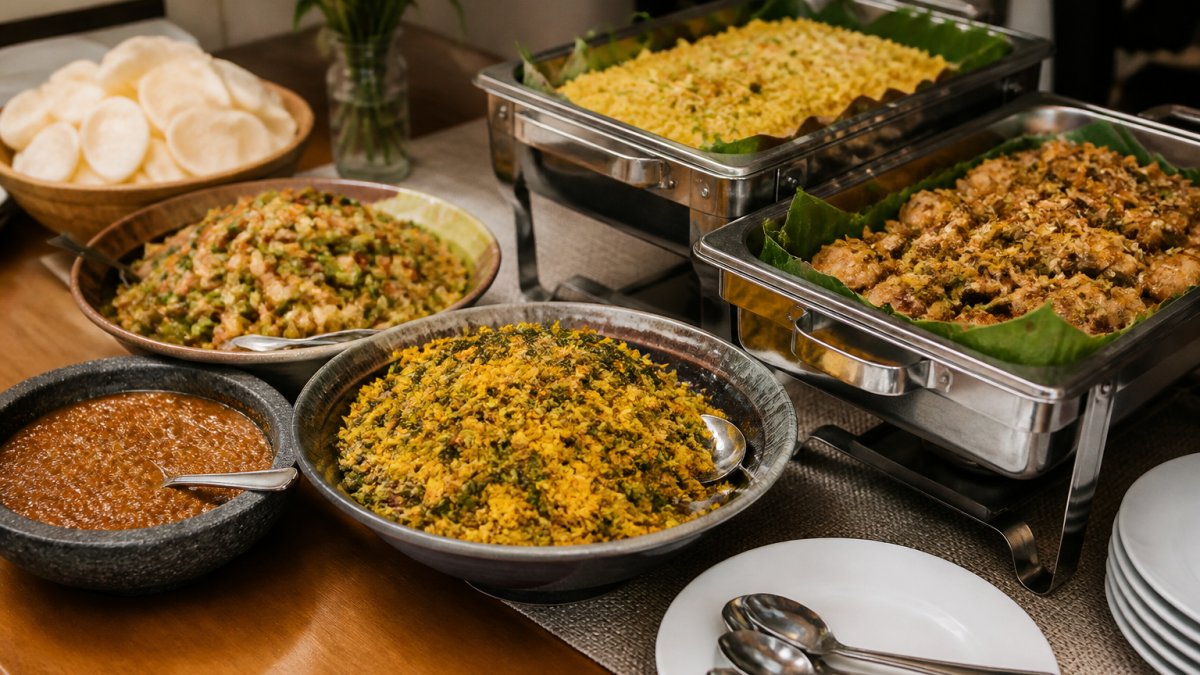
For a buffet, keep gluten-free dishes separate, use different serving utensils, and label everything clearly.
For a shared table, keep gluten-free items on a separate plate or section, away from shared bread or pasta.
Gluten-Free Menu Ideas and Naturally Safe Foods
Most of the food you already cook is naturally gluten-free, meat, fish, vegetables, rice, and legumes.
Naturally gluten-free proteins and mains
Grilled chicken, baked fish, slow-cooked meat, and legume-based curries are naturally gluten-free, and Indonesian cuisine has many safe options.
Rendang is typically gluten-free, but check the stock and soy sauce; soto ayam is safe with gluten-free stock.
Vegetables cooked in coconut milk, garlic, and spices are naturally gluten-free. Stir-fried greens, roasted root vegetables, and grilled eggplant all work.
Rice is always safe, serve it alongside mains to fill plates.
Gluten-free substitutes for bread, pasta, and flour
For bread, buy gluten-free bread from a bakery or shop that handles it properly, with no cross-contamination during baking.
Gluten-free pasta tastes different but works, cook it separately to avoid cross-contamination.
For sauces or coatings, use gluten-free flour or cornstarch, which thicken like wheat flour.
Rice flour, tapioca flour, and cornstarch all work for coating fried foods.
Preventing Cross-Contamination Gluten-Free During Preparation and Service
Cross-contamination is how gluten gets into food that should be safe, a bread crumb, a splash of soy sauce, a shared utensil, flour dust in the air.
The easier approach is to work through five stages in order, shopping, storage, cooking, serving, cleanup, applying the same rules at each.
Stage 1: Shopping
- Buy certified gluten-free products where possible. In Australia, look for the crossed-grain symbol, which indicates no detectable gluten.
- Keep gluten-free items separate from bread, flour, and baked goods in the trolley.
- Check that flour and bread bags are sealed, loose flour dust settles on nearby items.
- At bulk bins or deli counters, ask whether scoops or tongs are shared with gluten-containing products. If yes, buy pre-packaged.
Stage 2: Storage
- Store gluten-free products above, not below, wheat flour and bread, flour dust falls downwards.
- Keep gluten-free bread in its sealed original bag, or wrap and label it; shared bread bags are a common contamination source.
- Use separate, clearly labelled tubs for gluten-free flour, crumbs, and baking mixes.
- Don't reuse a container that held wheat flour unless it's been washed and dried thoroughly.
Stage 3: Cooking
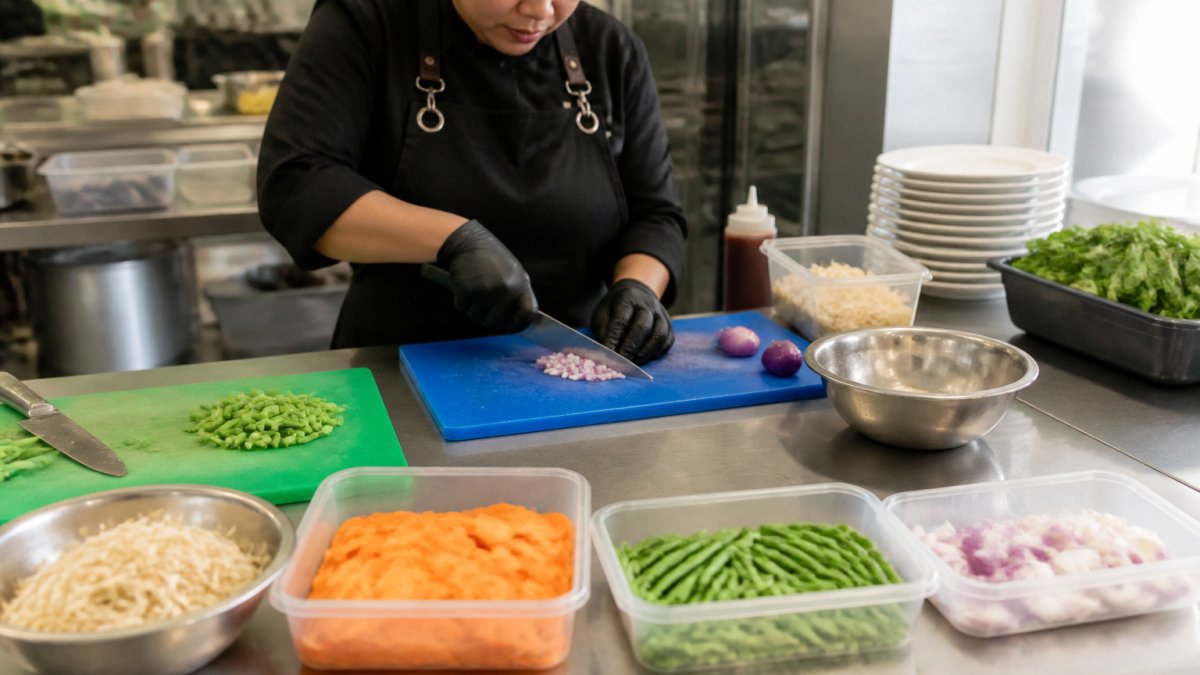
- Designate a gluten-free prep area: a clean bench section, separate board, and separate knife at minimum.
- Wash hands with soap and warm water for 20 seconds before touching gluten-free food, and dry with a clean towel or paper towel, not a shared tea towel.
- Use separate, ideally colour-coded cutting boards. Never cut gluten-free bread on a board that held regular bread without washing it first.
- Use separate utensils for stirring, tasting, and serving, don't double-dip between pots.
Stage 4: Serving
- Use separate serving utensils for every gluten-free dish, and label the utensil as well as the dish.
- Keep gluten-free dishes physically separate on the buffet, away from bread, pasta, and shared condiments.
- Put shared condiments, butter, chutney, mayonnaise, peanut sauce, in squeeze bottles or serve individual portions; a knife that touched regular bread then the butter contaminates the whole tub.
- Label every gluten-free dish clearly with a card listing the main ingredients so guests can double-check.
Stage 5: Cleanup
- Wash gluten-free utensils, boards, and pots separately, or first in fresh hot soapy water.
- Replace dishcloths and tea towels used on gluten-containing surfaces before wiping gluten-free areas.
- Wipe benches with a clean cloth and fresh water, crumbs and flour hide in corners and along bench edges.
- If catering again the next day, reset the gluten-free prep area from scratch; don't assume yesterday's clean is today's clean.
Your Gluten-Free Catering Checklist
Use this checklist before your event, covering planning, preparation, and service.
| Task | When | Who |
|---|---|---|
| Ask guests about dietary needs | At invitation | Event organiser |
| Confirm gluten-free guest count | 2 weeks before | Event organiser |
| Plan gluten-free menu | 2 weeks before | Cook/caterer |
| Buy gluten-free ingredients | 1 week before | Shopper |
| Check all ingredient labels | 3 days before | Cook |
| Plan prep space and utensils | 3 days before | Cook |
| Prepare gluten-free food separately | Day of event | Cook |
| Label all gluten-free dishes | Before service | Cook |
| Brief all serving staff | Before service | Event organiser |
| Keep gluten-free food separate | During service | Serving staff |
Print this checklist. Tick off each item. Don't skip steps.
Checking Ingredient Labels and Hidden Sources of Gluten
Gluten hides in unexpected places, soy sauce, stock cubes, salad dressings, sauces, and spice mixes. For a coeliac guest, one contaminated ingredient is enough to cause harm, so label-checking decides whether the meal is safe.
What Australian labels must tell you
Labels must declare gluten-containing cereals, wheat, rye, barley, oats, and their hybrids, usually in bold in the ingredients list or a "contains" statement. If those grains are named, the product contains gluten unless the label states it's been processed to remove it.
A product labelled "gluten-free" must contain no detectable gluten. The crossed-grain symbol is a standard mark for packaged foods meeting this requirement, the quickest visual check, though not mandatory.
Reading the label in three passes
- Ingredients list. Scan for wheat, rye, barley, oats, malt, and unrecognised ingredients. Malt comes from barley and hides in cereals, malt vinegar, and some confectionery.
- Allergen statement. Check the "contains" line, if wheat is listed, the product is out unless it's a gluten-free formulation.
- Advisory statements. "May contain gluten" or "made on equipment that also processes wheat" are voluntary warnings signalling real cross-contact risk. For a coeliac guest, treat these as a no; for wheat allergy or gluten sensitivity, ask the guest, tolerance may differ.
Ingredients that commonly hide gluten
- Soy sauce and most Asian-style sauces (wheat is standard)
- Stock cubes, liquid stock, and gravy powders
- Salad dressings, especially creamy ones
- Marinades and pre-seasoned meats
How to verify a packaged ingredient
- If the label is unclear, contact the manufacturer, most food businesses list a phone number or contact form. Ask: does this product contain gluten, and is it made on a line that also handles wheat?
- Record the answers; a simple spreadsheet of verified products saves re-checking if you cater regularly.
- If a product is ambiguous and you can't confirm it, swap it, there's almost always a certified gluten-free alternative for sauces, stocks, and spice blends.
How to verify a caterer's or supplier's gluten-free claim
If you're ordering in or working with another caterer, don't rely on the word "gluten-free" on a menu. Ask before you commit:
- Is the dish prepared in a separate area, or on the same bench as gluten-containing food?
- Are utensils, boards, and pans separate, or shared and washed between uses?
- Is the fryer shared with battered or breaded items?
- Are staff trained in allergen handling, with a written procedure?
A caterer who answers these clearly is usually set up properly; one who can't is a risk you don't need.
When you can't guarantee safe preparation
Sometimes you can't control every step, a shared kitchen, a busy event, a caterer who won't confirm their process. In that case:
- Tell the guest what you can and can't guarantee, most would rather know than guess.
- Offer a sealed, individually packaged gluten-free portion from a certified supplier, kept separate until it reaches them.
- Ask what works for them: bringing their own food, a simple naturally gluten-free plate, or eating beforehand are all fine.
- Never serve a dish you're unsure about and hope for the best, the downside for a coeliac guest is too high.
Frequently Asked Questions
What's the difference between coeliac disease, wheat allergy, and gluten sensitivity when catering?
Coeliac disease is an autoimmune condition where gluten damages the small intestine, even tiny traces (20 parts per million) can cause harm. Wheat allergy is an immune reaction to wheat proteins and may allow other gluten sources. Gluten sensitivity causes symptoms like bloating and fatigue but doesn't damage the intestine. When catering, treat coeliac disease guests as requiring the strictest precautions: zero cross-contamination, separate preparation, and verified ingredient safety. Ask guests directly which condition they have so you can cater appropriately.
What questions should you ask guests about their gluten-free dietary requirements?
Ask: Do you need gluten-free food, and is it coeliac disease, wheat allergy, or sensitivity? Are there other dietary needs (dairy-free, vegan)? Will you eat food prepared in a shared kitchen, or do you need separate preparation? Do you have preferred proteins or dishes you'd like included? Can you eat processed gluten-free products, or do you prefer whole foods? Get answers in writing before planning your menu so you can source safely and avoid assumptions.
How can you prevent cross-contamination when serving gluten-free food?
Use separate cutting boards, knives, and preparation areas for gluten-free dishes. Wash hands thoroughly before handling gluten-free food. Use dedicated serving utensils for gluten-free dishes and never let them touch regular food. Prepare gluten-free meals first, before handling gluten-containing foods. At buffets, place gluten-free dishes at one end with a clear barrier. Label all dishes clearly, including ingredients and allergen warnings. If using a caterer, confirm they have separate storage, prep space, and staff training for cross-contamination prevention.
What are easy gluten-free menu options for a buffet or event?
Naturally gluten-free options include grilled chicken, fish, or meat; roasted vegetables; rice, legumes, and salads; fresh fruit and cheese platters; and rice crackers. Indonesian cuisine offers many naturally gluten-free dishes like grilled satay (verify sauce), steamed fish, and vegetable curries cooked with coconut milk. Avoid sauces, stocks, and dressings unless you've checked labels for hidden gluten. Provide gluten-free bread or pasta alternatives if serving bread-based meals. Always label dishes clearly and keep gluten-free items separate from regular food during service.