
Table of Contents
- Why Indonesian buffet catering works for corporate events
- Indonesian buffet menu ideas for your corporate gathering
- Corporate catering menu planning essentials
- Business event catering checklist for success
- Corporate lunch catering: portion sizes and value
- Handling dietary requirements and allergens
- What sets authentic Indonesian buffet catering apart
- Frequently Asked Questions
Last Updated: October 18, 2026
Why Indonesian buffet catering works for corporate events
Indonesian buffet catering brings warmth, authenticity, and genuine hospitality to corporate gatherings. When teams gather around shared food, the meal becomes more than sustenance, it becomes the foundation for connection. An Indonesian buffet catering service transforms a standard lunch into a memorable experience that reflects your company's values and care for its people.
At Ninin's Indo Street Food, we've catered corporate functions since 2007, watching how the right food changes the energy of a room. The appeal of Indonesian cuisine for business events goes beyond novelty. Generous portions, bold flavours, and dishes designed for sharing create an informal atmosphere that loosens formality and encourages conversation. Your team leaves not just fed, but genuinely satisfied.
Corporate events demand reliability. Late arrivals, inconsistent portions, or bland food undermine your event before it starts. Indonesian buffet catering, when executed with care, eliminates those risks. Fresh, slow-cooked dishes prepared with family recipes deliver consistency that matters when your reputation is on the line.
Indonesian buffet menu ideas for your corporate gathering
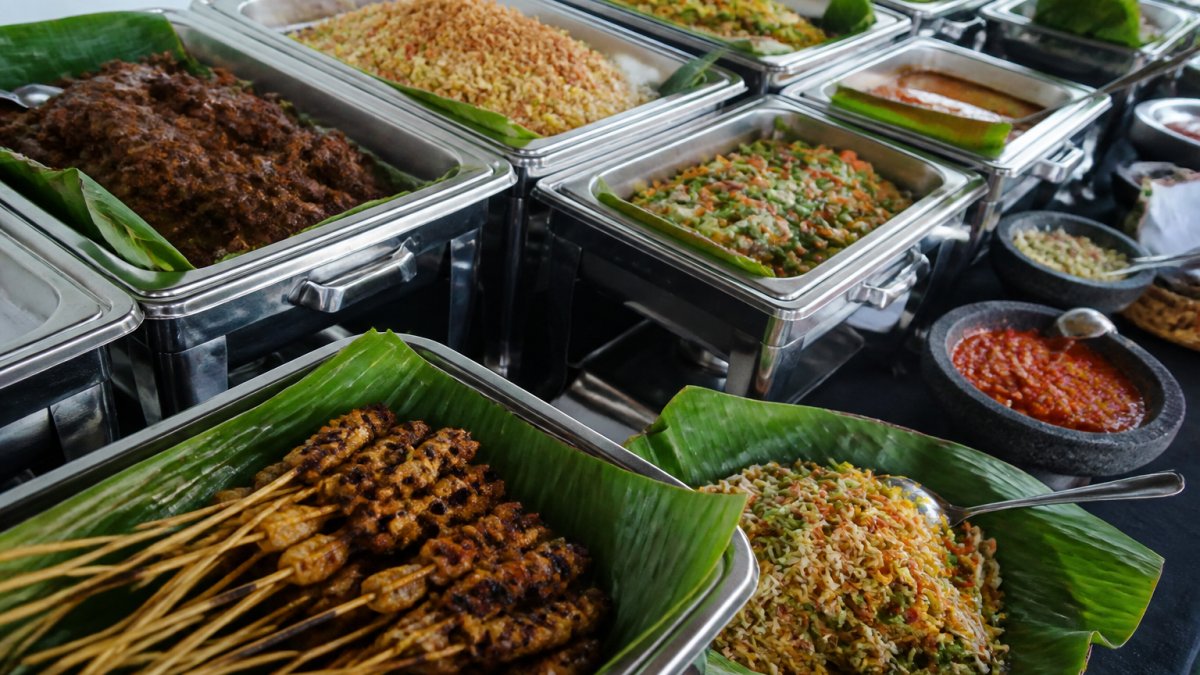
The strength of Indonesian cuisine lies in its variety and shareability. A well-planned Indonesian buffet menu accommodates diverse palates without requiring separate meals for different guests.
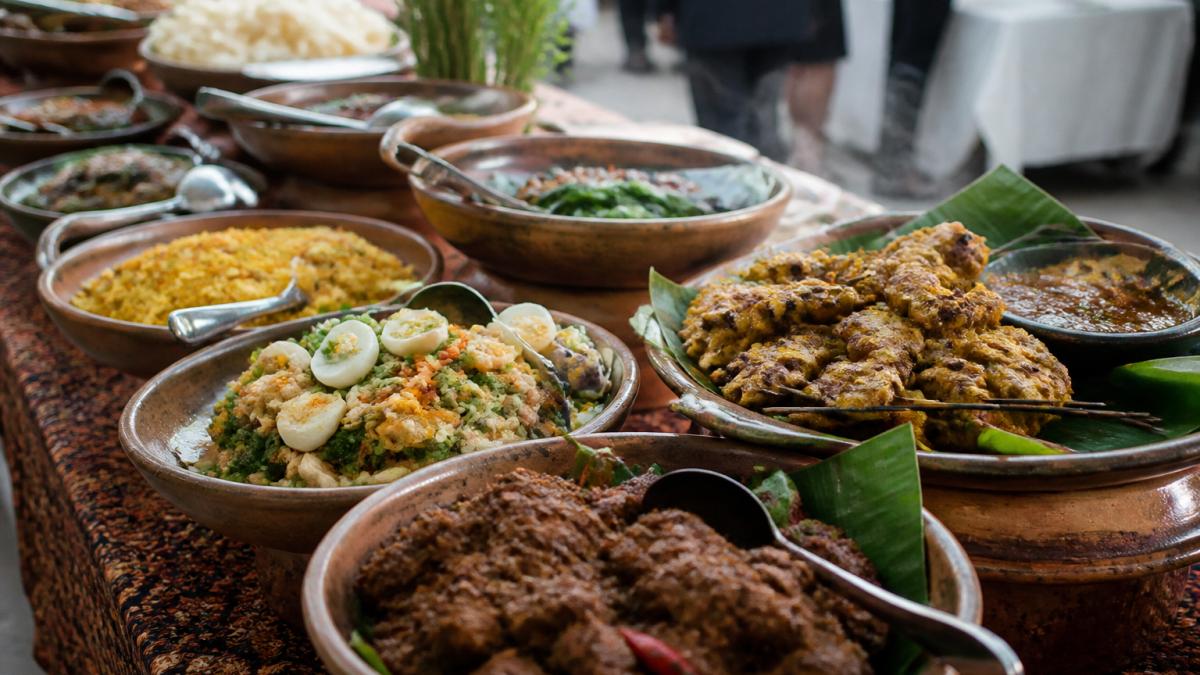
What most caterer pages leave out is the detail that actually helps a corporate planner shortlist: what each dish tastes like, how hot it is, whether it suits vegetarian or gluten-free guests, and how much to order.
Sample corporate buffet menu (serves a mixed office audience)
| Dish | What it is | Spice level | Dietary notes | Approx. serving per guest |
|---|---|---|---|---|
| Beef rendang | Slow-cooked beef in coconut and spice paste | Mild-medium | Contains nuts (candle nut); gluten-free; not vegetarian | 150-180 g |
| Chicken satay with peanut sauce | Grilled skewers, sauce served separately | Mild | Contains peanuts; gluten-free if sauce is house-made | 3-4 skewers |
| Gado-gado | Blanched vegetables with peanut dressing | Mild | Contains peanuts; vegetarian; vegan if dressing omits shrimp paste | 120-150 g |
| Tempe goreng | Fried soybean cakes | None | Vegetarian and vegan; contains soy | 80-100 g |
| Nasi kuning or fried rice | Turmeric rice or wok-fried rice | None | Gluten-free; check soy sauce in fried rice | 100-150 g |
| Vegetable curry (sayur lodeh) | Coconut-based vegetable curry | Mild | Vegetarian and vegan; gluten-free | 120-150 g |
Use this as a benchmark rather than a fixed list. A caterer who can label every dish with spice level, allergens, and a vegetarian/vegan status is one who has thought about corporate service.
Building a balanced buffet from 3-5 dishes
A tight menu beats a sprawling one. Choose one slow-cooked meat dish (rendang or a braised chicken), one grilled item (satay), one vegetable-forward dish (gado-gado or sayur lodeh), one starch (rice or noodles), and one plant-based protein (tempe or tofu).
Vegetarian and vegan guests
Tempe goreng, vegetable spring rolls, and coconut-based vegetable curries hold their own against meat dishes. They are not afterthoughts, they are genuinely flavourful components of the menu. A corporate buffet that treats vegetarian guests as an afterthought creates a two-tier experience.
Spice levels and conservative eaters
Indonesian food does not have to be hot. Rendang and satay are typically mild to medium, and sambal should always be served on the side so guests can control their own heat.
Corporate catering menu planning essentials
Menu planning for corporate events requires balancing three competing demands: variety (to suit different tastes), simplicity (to keep preparation manageable), and authenticity (to deliver genuine flavour). Start by asking yourself: What's the tone of this event? A formal boardroom lunch calls for different plating than a team-building gathering.
Choose between 3-5 core dishes rather than overwhelming the buffet with 10+ options. More choices paradoxically make selection harder and increase waste. A tight menu, satay, rendang, gado-gado, fried rice, and one vegetable dish, gives structure while leaving room for customisation. This is where corporate catering menu planning becomes practical: fewer dishes mean better quality control and fresher food throughout service.
Communicate dietary needs upfront. Ask your team or event organiser about allergies, vegetarian preferences, and religious dietary requirements before finalising the menu. A caterer who asks these questions before proposing a menu is one worth trusting. This prevents awkward conversations mid-event and ensures every guest feels considered.
Business event catering checklist for success
Timing, quantities, and dietary needs form the backbone of successful corporate catering. A business event catering checklist should address three critical areas: arrival and setup, portion planning, and service flow.
Timing and Quantities
Arrive 30-45 minutes before guests are expected. This window allows for setup, temperature checks, and adjustments without rushing. For portion sizes, plan for roughly 250-300 grams of food per person for a lunch event (that's a substantial plate, not a side dish). If your event runs longer than two hours, add 15-20% extra to account for second helpings and guests arriving later.
Delivery, Setup, and Service Requirements
Confirm delivery address, parking, and access details weeks in advance. On the day, identify a point person on your team who can greet the caterer, answer questions, and coordinate any last-minute changes. Clarify whether the caterer will remain on-site during service or deliver and depart. For corporate events, on-site presence matters, someone needs to monitor food temperature, restock platters, and handle unexpected requests.
Corporate lunch catering: portion sizes and value
Corporate lunch events typically run 60-90 minutes. Portion sizes should reflect that people are eating, not grazing. A proper serving of rendang or satay is 150-180 grams, paired with 100-150 grams of rice or noodles, plus vegetables. This totals roughly 300 grams and leaves room for guests to try multiple dishes without feeling overstuffed.
Value in corporate lunch catering isn't about finding the cheapest option, it's about portion quality and reliability. A caterer who skimps on meat or uses pre-made components cuts costs but compromises the experience. Fresh, slow-cooked dishes cost more because they require time and skill. When you're paying for catering, you're paying for that time and skill to be applied to your event, not to generic bulk meals.
Ask potential caterers directly: "How much meat is in each serving?" and "Do you prepare this fresh or use pre-made components?" Their answers reveal whether they're competing on price or on quality. The honest caterer will tell you exactly what you're getting.
Handling dietary requirements and allergens
Dietary requirements are non-negotiable. A guest with a gluten allergy who eats contaminated food doesn't just miss out, they spend the evening unwell. Halal requirements aren't preferences; they're religious obligations. Vegan guests aren't being difficult; they're being consistent with their values.
A professional Indonesian buffet catering service treats these as logistical challenges to solve, not obstacles to resent. That means a documented process, not a verbal promise. The checklist below is what to ask for in writing before you sign off on any corporate buffet.
1. A full ingredient and allergen list, per dish
Request a written list for every dish at least two weeks before your event. It should name the major allergens present, peanuts, tree nuts, soy, gluten, shellfish, egg, dairy, and flag where cross-contact is possible in the kitchen.
2. Clear labelling at the buffet
Every dish should carry a label at the point of service stating the dish name, whether it is vegetarian, vegan, gluten-free, or halal, and which allergens it contains.
3. Separate utensils and a cross-contact plan
Separate serving utensils for each dish are the minimum. For serious allergies, ask how the caterer prevents cross-contact during preparation, separate boards, separate fryers, or a dedicated prep area.
4. Halal handling
Halal is a religious requirement, not a dietary preference. Ask whether meat is halal-certified, whether halal and non-halal dishes are prepared and served separately, and whether the caterer can provide documentation.
5. A named contact for dietary questions
On the day, there should be one person on the catering team who owns dietary questions, someone your point person can reach without hunting through the room. Confirm this name and number in writing the week before.
A caterer who asks about allergies, vegetarian preferences, and religious requirements before proposing a menu is one worth trusting. A caterer who waits for you to raise them is one you will have to manage. The difference shows up in the paperwork long before it shows up on the buffet.
What sets authentic Indonesian buffet catering apart
Authenticity in Indonesian catering means several things working together: family recipes passed through generations, slow-cooking methods that build flavour rather than rushing it, and a refusal to cut corners for convenience.
Mass-produced catering often relies on pre-cooked components reheated on-site. Authentic Indonesian catering cooks fresh. Rendang simmers for hours so the spices infuse the meat completely. Satay sauce is made from scratch, ground peanuts and spices combined to balance richness and heat. These aren't shortcuts you can compress into a quick prep schedule.
At Ninin's Indo Street Food, we've maintained these standards for nearly two decades. No shortcuts means every event gets the same care, whether it's a wedding for 150 or a corporate lunch for 30. Generous portions reflect our belief that feeding people well is a form of respect. Your team notices the difference between food prepared with care and food prepared to a budget.
Choosing the right caterer for your corporate event comes down to reliability, genuine flavour, and respect for your guests' needs. An Indonesian buffet catering service that listens to your requirements, delivers fresh food, and handles dietary needs professionally removes stress from event planning and leaves your team with a positive memory. At Ninin's Indo Street Food, we've built our reputation on exactly this: authentic Indonesian food, reliable service, and the belief that corporate events deserve better than generic catering. Get Instant Quote to discuss your event and see how we can make it memorable.
Frequently Asked Questions
What Indonesian dishes work well for a corporate buffet?
Dishes that travel well and appeal to mixed palates work best: satay with peanut sauce, beef rendang, chicken curry, fried rice, and fresh spring rolls. Include mild and spiced options so guests can choose their heat level. Slow-cooked stews maintain quality during service, and rice-based dishes absorb flavours without drying out. Indonesian buffet catering typically balances familiar proteins with aromatic spices, making traditional cuisine accessible to corporate audiences unfamiliar with the food.
How much food should I order for a corporate buffet?
Portion size depends on event length and whether alcohol is served. For a 2-hour lunch function with 50 guests, plan 300-400 grams per person. Longer events or evening functions may require 400-500 grams per person. Include vegetarian options at 20-30% of total quantity. Buffet service typically requires more food than plated meals because guests serve themselves. Your caterer can calculate exact quantities based on your guest count, event duration, and dietary mix.
Can Indonesian buffet catering accommodate dietary requirements?
Yes. Authentic Indonesian catering can adapt menus for gluten-free, dairy-free, vegan, and halal requirements. Communicate all dietary needs when requesting a quote so the caterer can plan appropriate dishes and avoid cross-contamination. Rice-based and vegetable-forward dishes naturally suit many dietary restrictions. Inform your caterer of allergens (peanuts, tree nuts, soy) so they can prepare separate portions or alternative dishes. Clear communication upfront prevents service-day complications.
How far in advance should I book corporate catering?
Book 2-4 weeks ahead for standard corporate events to secure your preferred date and allow time for menu planning and ingredient sourcing. Larger events (100+ guests) or specific menu customisations may require 4-6 weeks. Last-minute bookings are sometimes possible but limit menu flexibility and may incur rush fees. Contact your caterer early to discuss availability and confirm final guest counts at least 1 week before your event.